
Starting Block Force Plate
— Force Measurement for Sprint Starts —
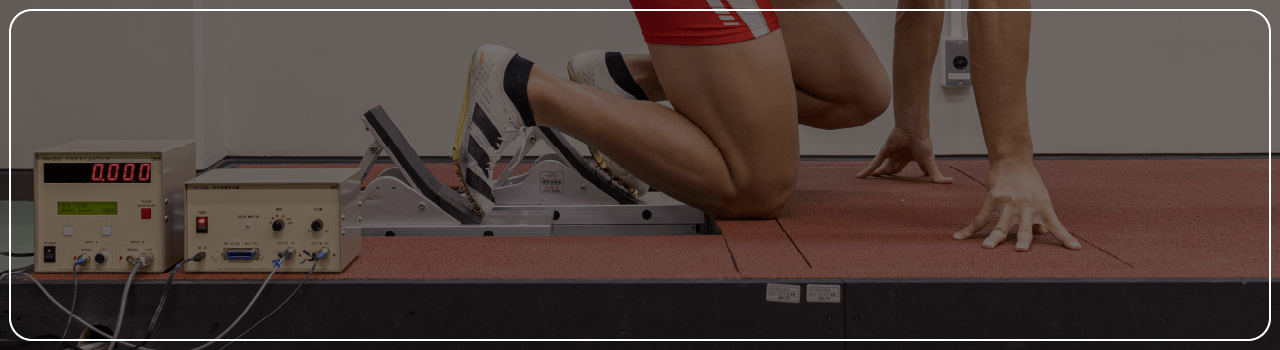
Starting Block Force Plate -Sensing Push-Off Forces at the Sprint Start-
Faculty of Management, Department of Management Studies Prof. Yasuo Shinohara
Josai University
Improving Sprint TimeTo reduce sprint time, not only physical conditioning but also various running techniques are required. The start technique is also a crucial factor.
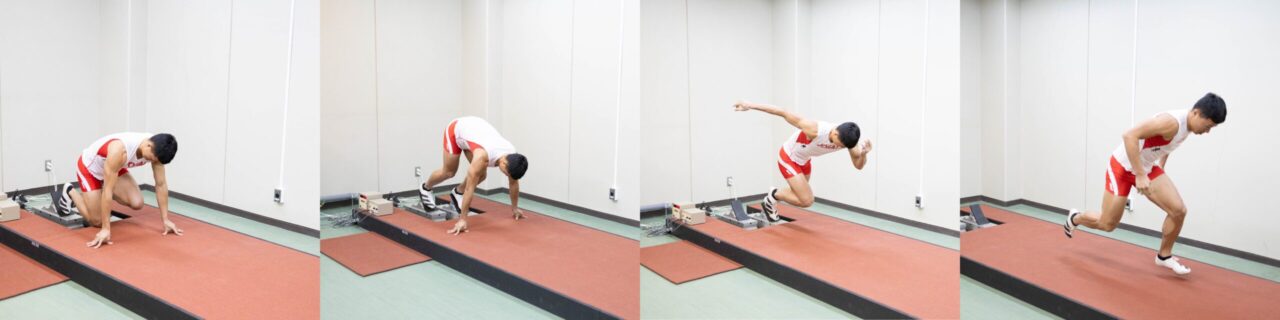
At the command “On your marks,” athletes line up at the starting line. Then at “Set,” they take the crouching start position. Finally, the race begins at the sound of the starting pistol.
In the crouching start, athletes must apply force to the starting blocks to propel the body forward from the stationary position at “Set.” The position and angle of the starting blocks vary among athletes. Key factors for achieving optimal performance at the start include the direction of the force applied to the starting blocks, the magnitude of that force, and how the force is generated. To analyze these aspects in detail, it is first necessary to quantitatively measure how athletes generate force during the start.
Sensing Forces at the StartFor this project, a custom force plate was designed with a size and rated capacity that perfectly match the starting block. This allows quantitative analysis of how athletes push against the starting blocks to generate forward motion at the start. As a result, athletes can objectively understand their movement patterns and how they apply force.
To reduce sprint time, not only the force applied to the starting blocks but also the force applied during the first step is extremely important. How quickly and effectively an athlete accelerates depends on the landing and force application of the first step. In addition to measuring force applied to the starting blocks, the magnitude and direction of the force during the first step are also measured. By quantitatively evaluating these forces, the system helps identify issues and supports training improvements.
In the future, the goal is to visualize the entire acceleration process until the sprinter reaches top speed, enabling optimal force generation, start dash technique, and effective feedback.
A long force plate is also installed in the hand placement area used during the crouching start, allowing analysis of balance and coordination between the hands and feet.
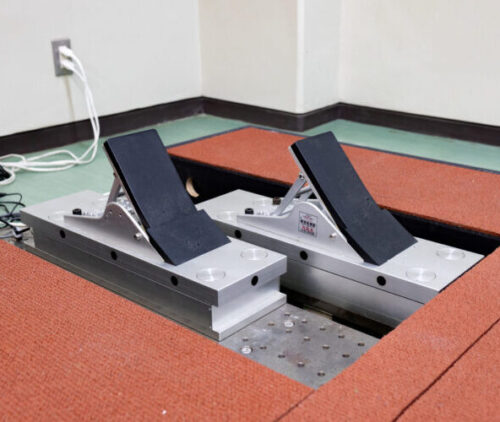 Dedicated FP for “Starting Blocks”
※Front/back adjustable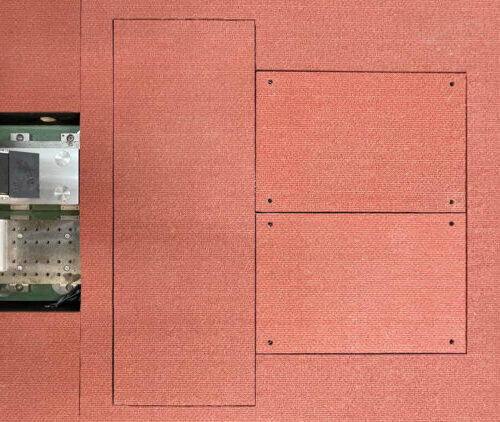 FP for “Hands” / FP for “First Step”
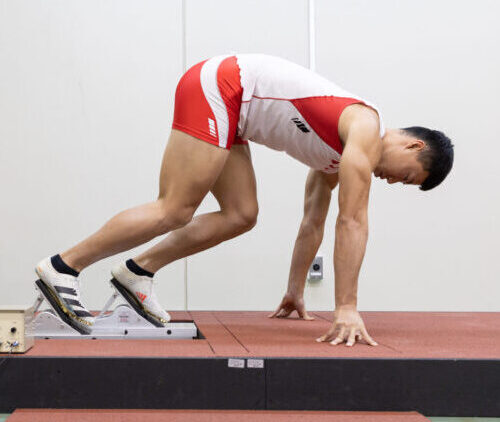 Natural start without discomfort
About the Running LaneAt Josai University, a running lane of approximately 10 meters was prepared so that sprint starts can be performed naturally without discomfort. The running lane is designed so that there is no step difference between the running surface and the force plates. In addition, the surface of the lane is made of tartan track material, similar to actual competition environments, allowing athletes to measure start forces while wearing spikes.
- The force plates are also finished with tartan material, enabling measurements without discomfort and allowing athletes to perform with their usual running motion.
- The optimal design of walking or running lanes varies depending on the type of force plate used, surface material, installation environment, and operational conditions. We conduct advance consultations for the design and installation of dedicated walking or running lanes.
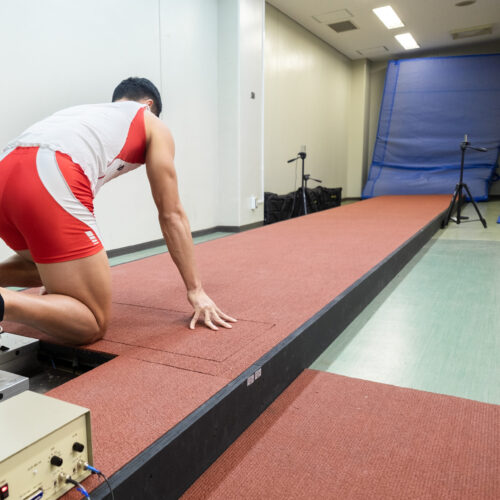
Running lane of over 10 m for realistic sprint start simulation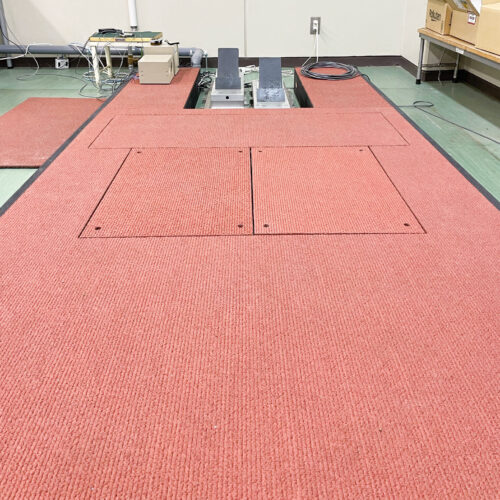
Compatible with both left and right lead legs