Toward Establishing a Flight Dynamics Model for Hang Gliders
— Measurement of Control Forces —
Toward Establishing a Flight Dynamics Model for Hang Gliders
— Measurement of Control Forces —
Provided by: Department of Aerospace Engineering Flight Control Laboratory (Prof. Ochi), National Defense Academy
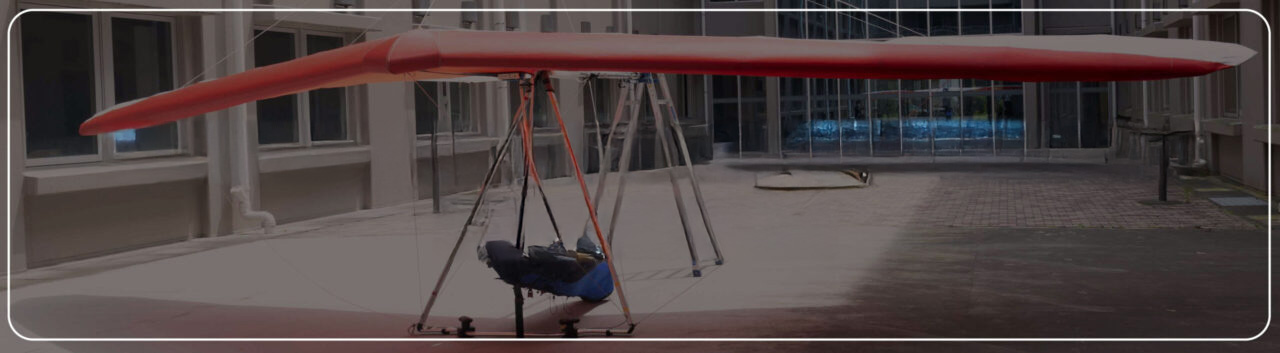
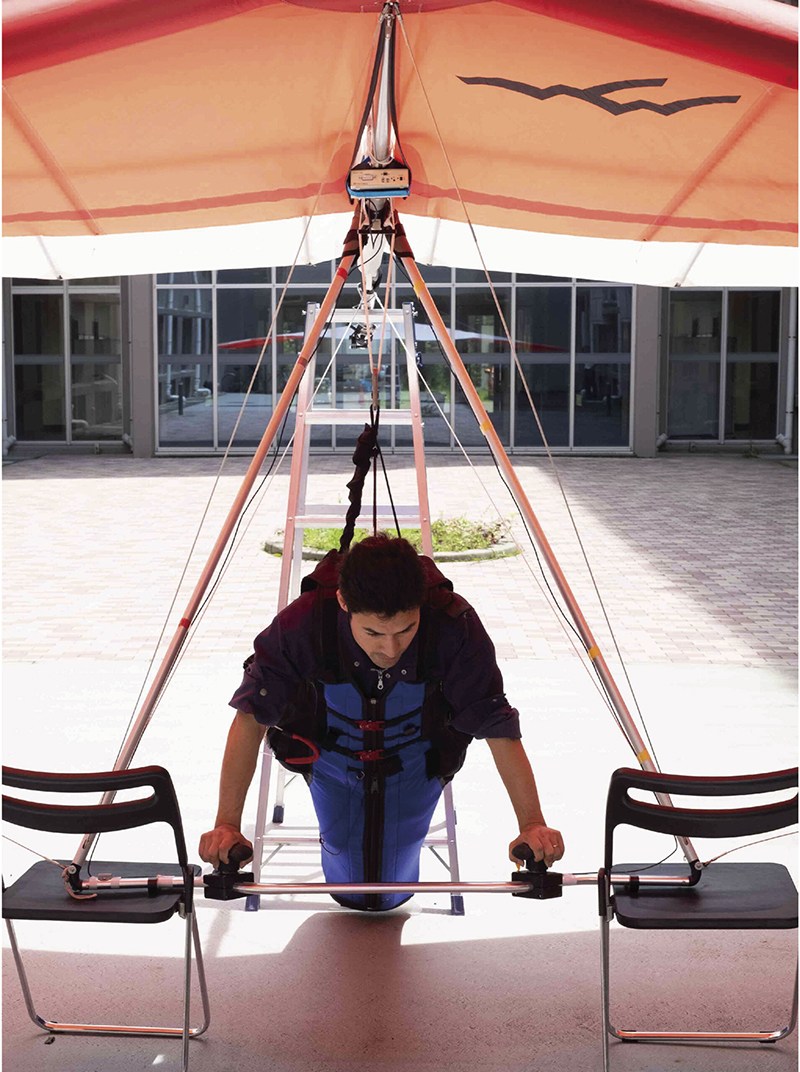
What is a Hang Glider?A hang glider is a lightweight aircraft designed for human flight. It is mainly composed of synthetic fiber fabric and a metal frame, with structural components that maintain the wing shape. The pilot is suspended in a harness hanging from the keel and controls the direction by pushing and pulling the base bar forward, backward, left, and right.
※The pilot begins with the harness partially worn and runs to take off with their legs extended. After takeoff, the pilot places their legs inside the harness and locks it completely while in flight.
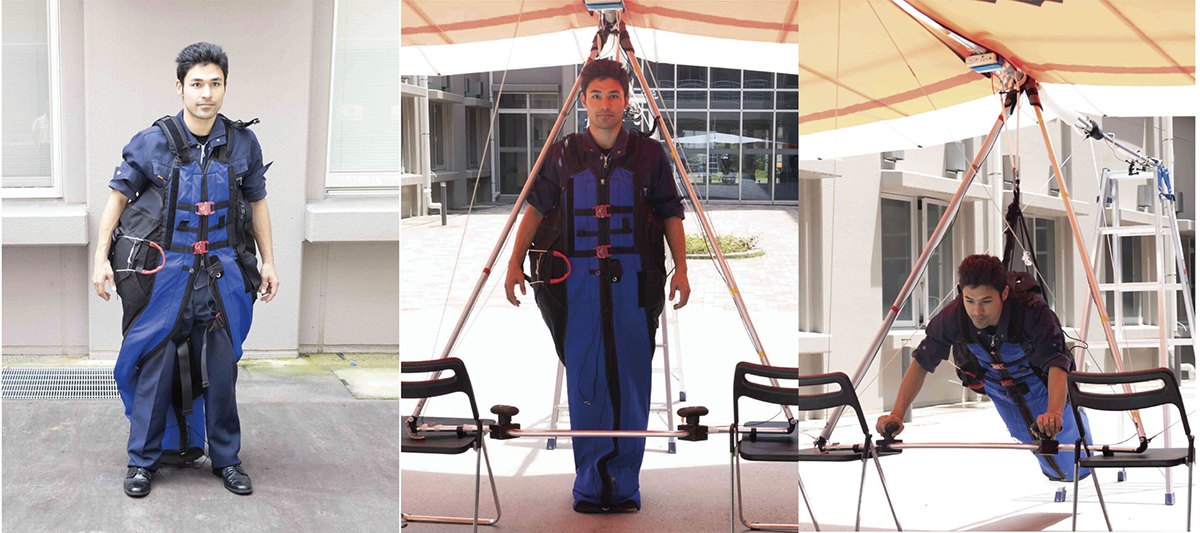 Half harness attachment → Fully secured harness
Challenges in Flight Measurement SystemsIn recent years, hang glider experience simulators have been developed. These simulators are not affected by weather conditions and allow hang gliding experience events to be held even in urban areas, contributing to the promotion of the sport.
However, current simulators use the motion model of gliders, and a motion model specifically for hang gliders has not yet been established. To develop a simulator capable of reproducing realistic control behavior, a dedicated hang glider motion model is required. Once such a model is established, it will enable not only more realistic flight experiences but also more efficient flight training.
Principle of Flight ControlA hang glider is controlled by the pilot manipulating the base bar. In other words, the pilot applies force to the base bar and shifts their center of gravity to perform climbing, descending, and turning maneuvers.
Specifically,
- Acceleration / Deceleration: When the pilot pushes their body forward, the nose pitches downward and speed increases. Conversely, pulling back raises the nose and reduces speed.
- Turning Left and Right: By pushing the base bar sideways, the wing tilt changes, enabling the glider to turn.
In this way, the aircraft attitude is controlled through the application of force.
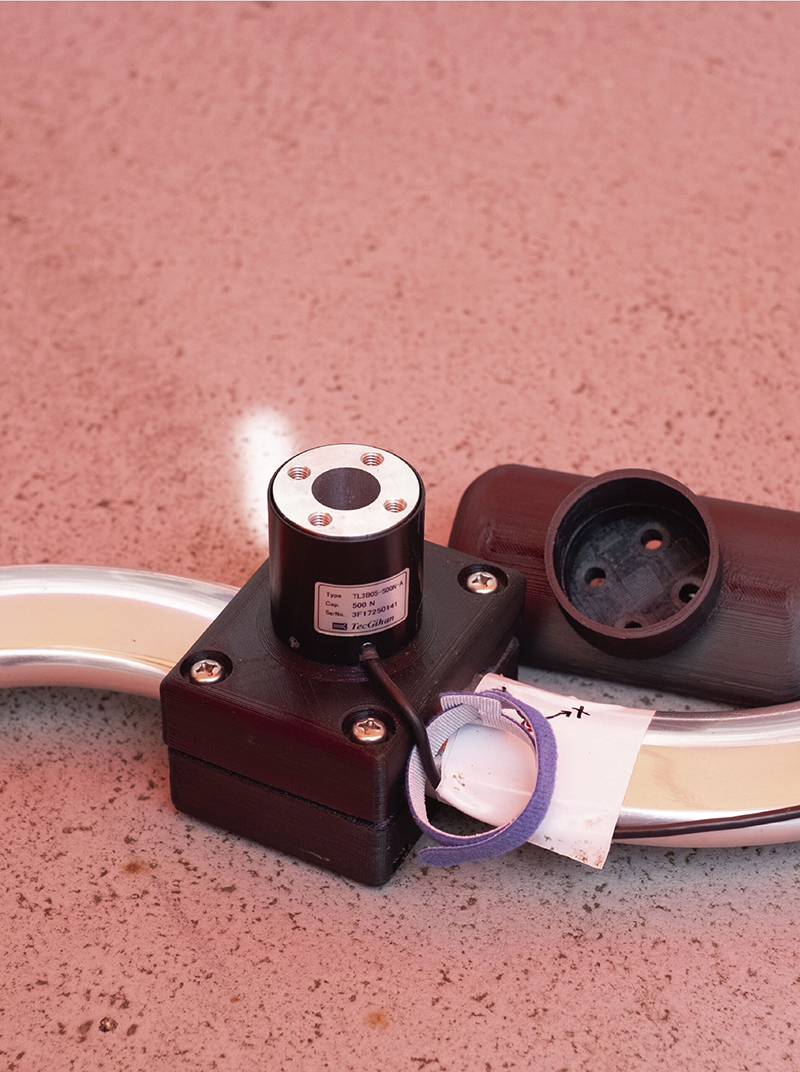
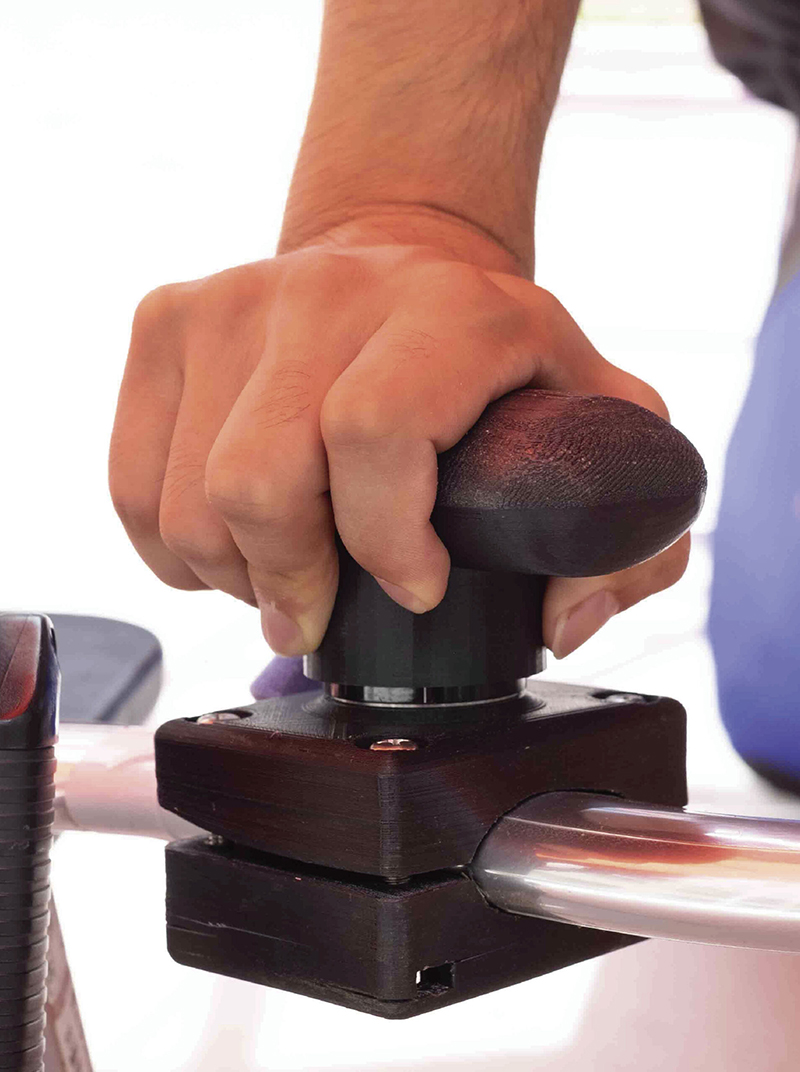
In this project, grips containing 3-axis force sensors (TL3B05) are installed on both the left and right sides of the base bar. These sensors measure the forces applied by the pilot during acceleration, deceleration, and turning maneuvers, capturing the three-axis force components (compression/tension and shear forces).
※In addition to force data, an IMU sensor with GPS receiver simultaneously acquires acceleration, angular velocity, attitude angles, and positional information.
Hang Glider Dedicated Motion ModelThis flight measurement system can simultaneously measure the pilot’s control input and the aircraft motion during flight. Using the acquired data and motion models, it becomes possible to estimate aerodynamic parameters and develop simulators capable of reproducing real flight behavior.
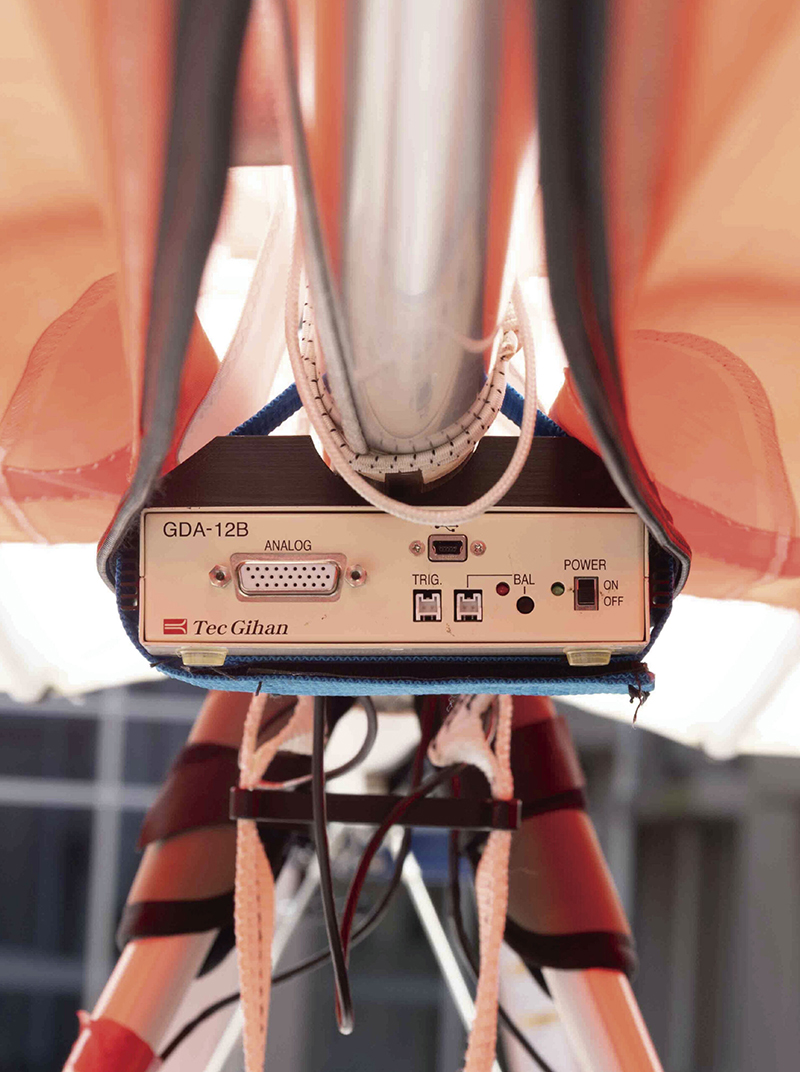
About the Strain AmplifierIn this system, six channels of the 12-channel strain amplifier GDA-12 are used, and a measurement laptop PC is mounted on the hang glider during flight. The sensors, GDA-12, and laptop PC are all connected via cables, which are routed along the airframe structure.
The GDA-12 is fixed near the center of the aircraft structure, and the laptop PC is mounted between the airframe and the wing. Since the wing receives direct sunlight and becomes hot, and the amplifier is controlled via the PC, the recording must be started just before takeoff, after which the laptop PC must be secured.
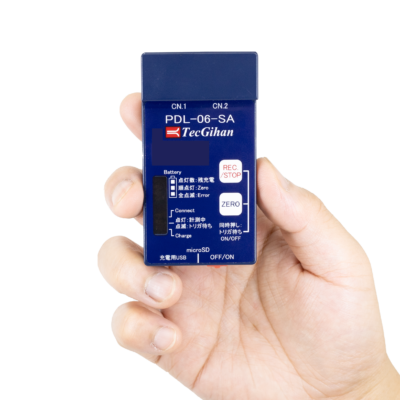
In contrast, the new product PDL-06-SA can operate completely without a PC, allowing the system to be completed with just the sensors and PDL-06-SA. Since the PDL-06-SA is compact, it can be placed near the sensors without affecting the aircraft.
This significantly reduces setup effort and enables more efficient operation.