
Canine Gait Measurement
– Condition Assessment, Disease Detection, and Rehabilitation –
Canine Gait Measurement – Condition Assessment, Disease Detection, and Rehabilitation –
Faculty of Veterinary Medicine, Department of Veterinary Science, Okayama University of Science Prof. Takamasa Itoi
Just like humans, dogs also require appropriate treatment, evaluation, and rehabilitation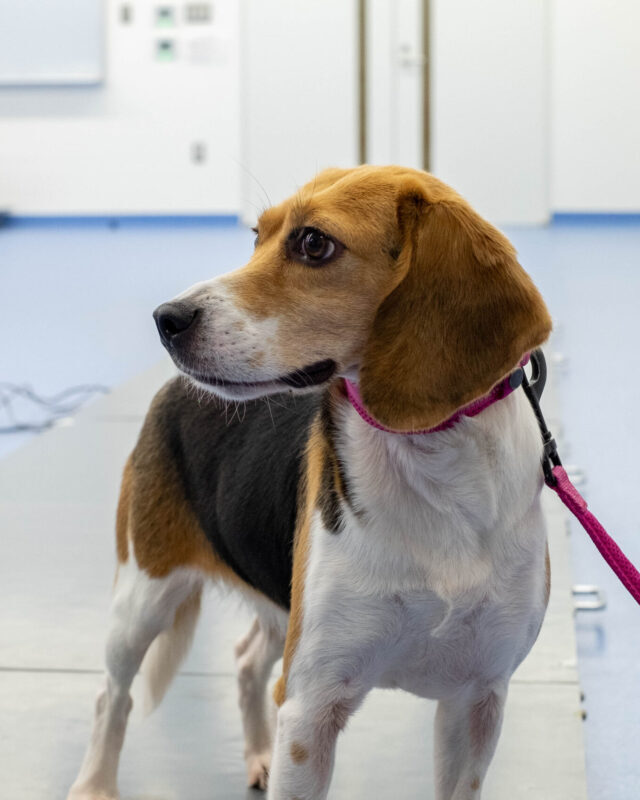
Beagle dog Ume-chanIn recent years, partly due to the impact of the COVID-19 pandemic, more people are keeping pets, and the market for pet-related products is expanding. Dogs, in particular, are highly popular, and selective breeding has resulted in breeds with various skeletal structures. For example, breeds such as the long-bodied Miniature Dachshund and Beagle are prone to intervertebral disc herniation as they age. Just as human society faces the issue of a super-aging population, dogs are also aging, leading to an increase in related diseases (such as frailty). Additionally, congenital conditions and accidents can also result in walking difficulties.
Prof. Itoi of Okayama University of Science (Department of Veterinary Science) is conducting research on treatments and recovery for diseases such as spinal cord injuries in dogs.
An approach based on measurement data
Canine rehabilitation has not yet been fully established, and whether appropriate rehabilitation is being provided for each case has traditionally been judged by observing gait based on experience.
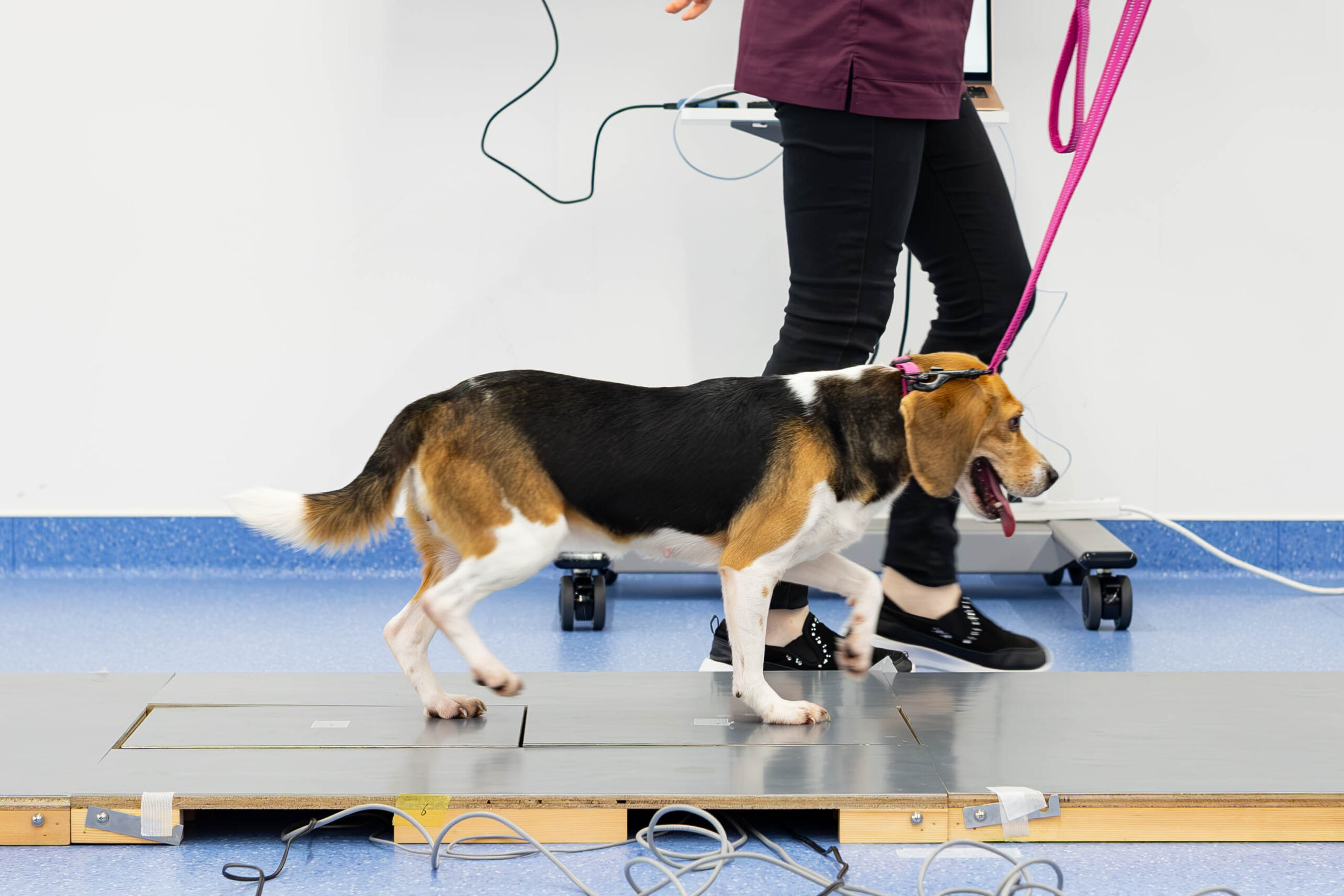
By measuring gait using force plates and motion capture, factors such as force exertion during walking and joint angles can be quantified. This allows what was previously judged based on experience to be evaluated quantitatively, including the current condition and the degree of improvement after treatment, based on measurement data.
Additionally, since hospitals are environments different from the home, some dogs may walk as if they are behaving normally. In such cases, measurement data may also help detect diseases.
Gait measurement in veterinary medicine has been conducted for more than a decade, but there are still many unknown areas. For example, there are many dog breeds, and there are significant differences in body size from small to large dogs. It is necessary to continue researching detailed gait analysis for each breed. In the future, it is expected that data obtained from force plates and motion capture (movement information) will enable more detailed evaluation for individualized treatment and follow-up.
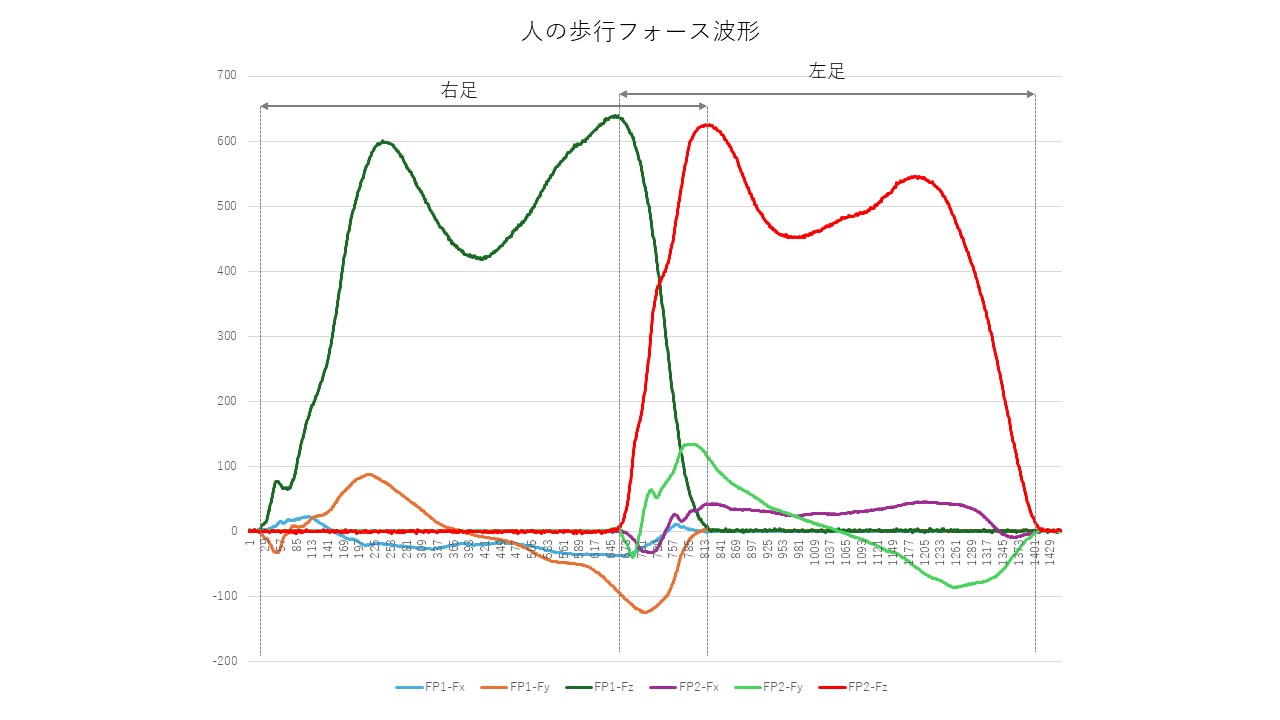
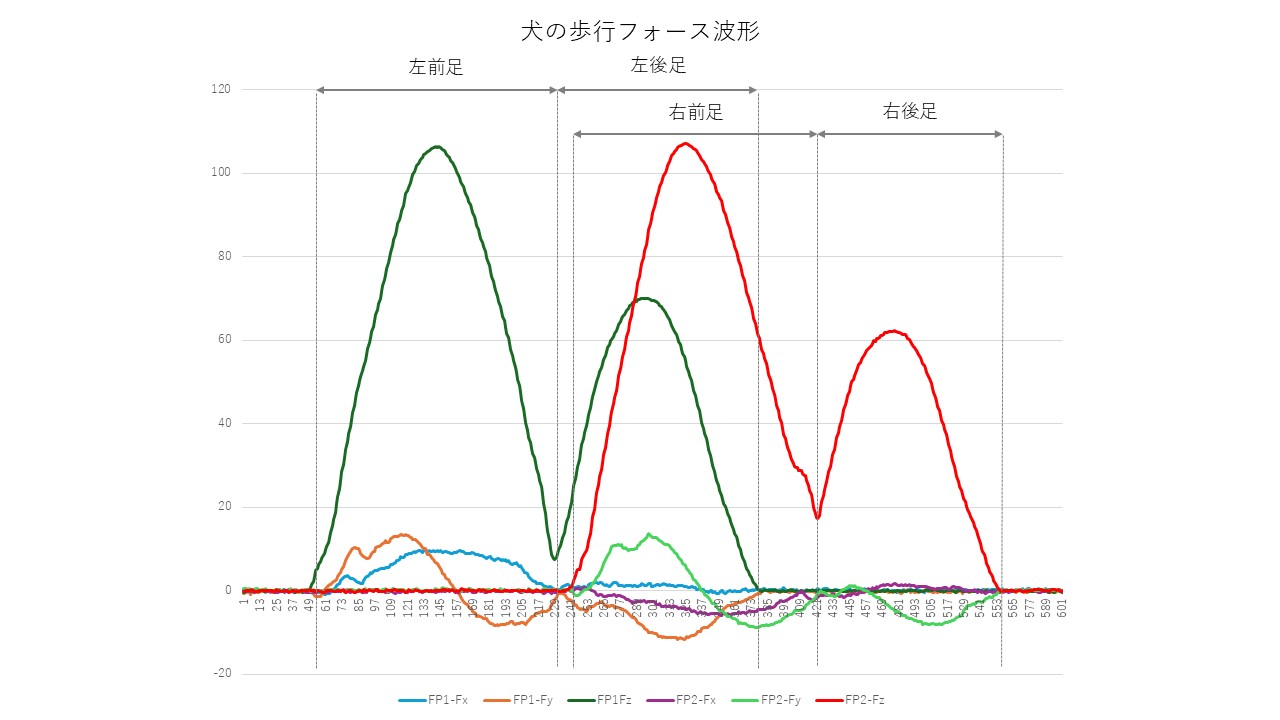
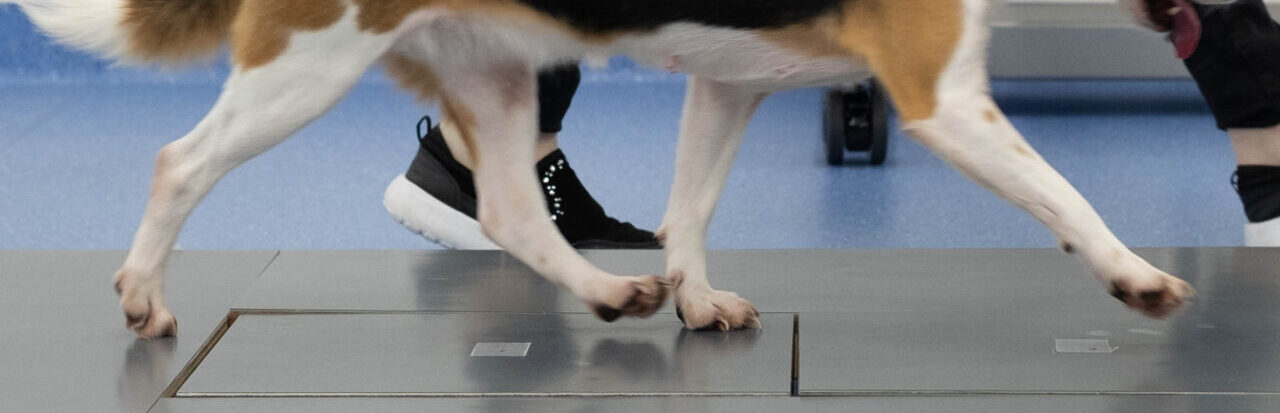
*In canine gait, there are moments when the forelimbs and hindlimbs contact the ground simultaneously
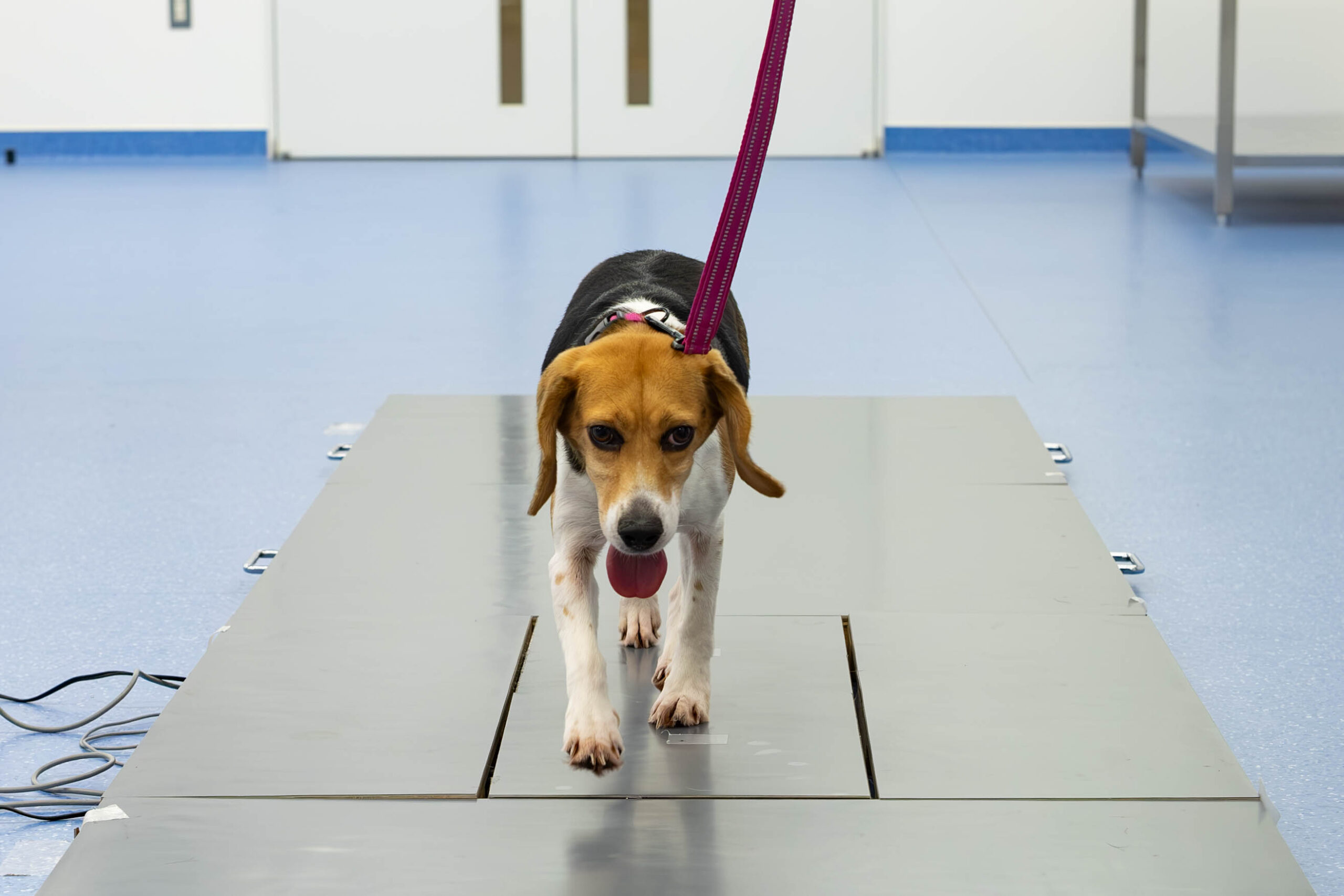
Evaluation of canine gait using a force plateDogs, like humans, can become nervous. Because the environment at a hospital differs from that at home, some dogs may not walk in a relaxed, natural manner. In addition, some dogs may become tense when walking over a force plate. Therefore, efforts are made to obtain natural walking data by acclimating the dogs to the environment beforehand, such as through practice walking before measurement.
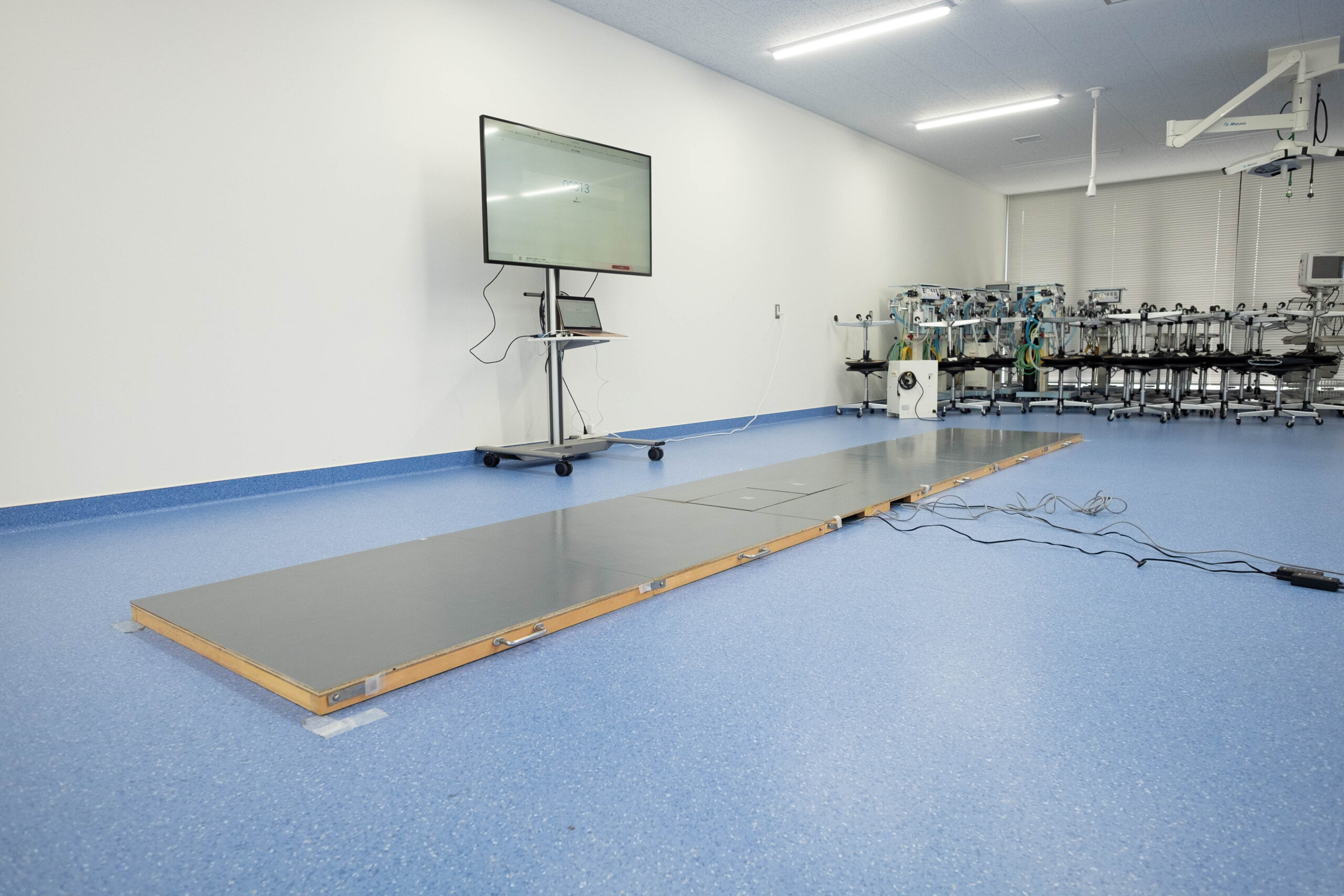
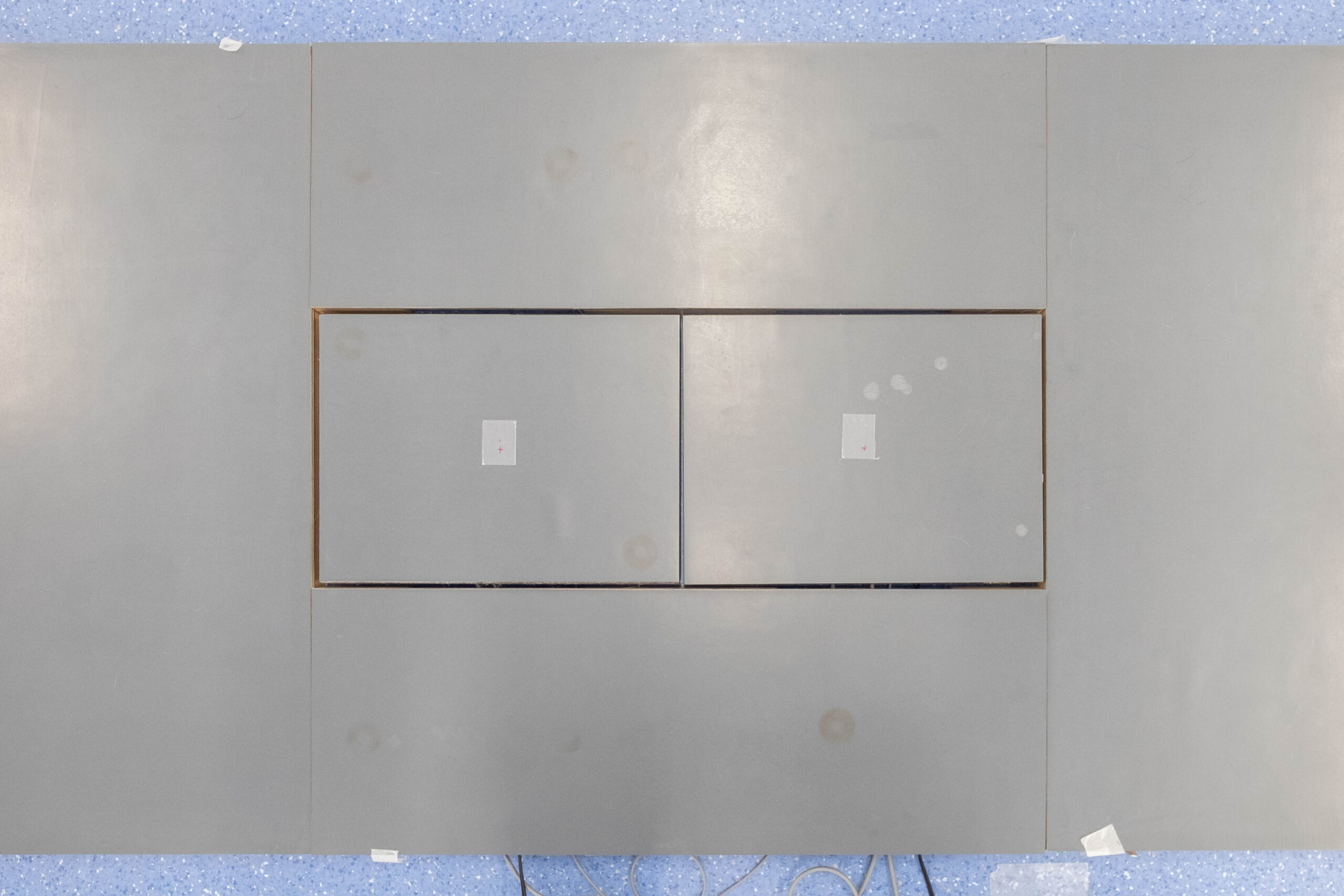
In human gait measurement, a force plate with a length of 600 mm is often used to match stride length. However, in this case, a smaller 400 mm force plate (TF-3040) is used. Since the subject is a medium-sized Beagle, the size matches its stride length. A walkway is also prepared, and the height of the ground surface and the force plate surface are made level.
Application to rehabilitation using wheelchairsCurrently, under the “Living Creatures QOL” project conducted by Okayama University of Science, leveraging the strengths of a comprehensive university, development of rehabilitation-capable wheelchairs for dogs is underway in collaboration with Prof. Tetsuya Akagi and Prof. Feifei Zhao from the Faculty of Computer Science and Engineering. Caring for dogs with severe spinal cord injuries caused by accidents or intervertebral disc herniation can be extremely challenging. Depending on the severity, the recovery rate of walking ability through treatment is around 50–60% in severe cases. In cases of spinal cord injury, the hind limbs may become completely paralyzed, requiring the dog to rely on a wheelchair for the hind limbs and move using only the forelimbs.
Basically, in dogs, the forelimbs are mainly responsible for braking and directional control, while the hind limbs provide propulsion. In wheelchair walking, the forelimbs must support the body and also generate propulsion, resulting in a gait different from natural walking. By applying data obtained through gait analysis using force plates, research is being conducted into new forms of treatment through the development of devices that incorporate rehabilitation functions.
“Living Creatures QOL” Project: https://www.ous.ac.jp/qol/
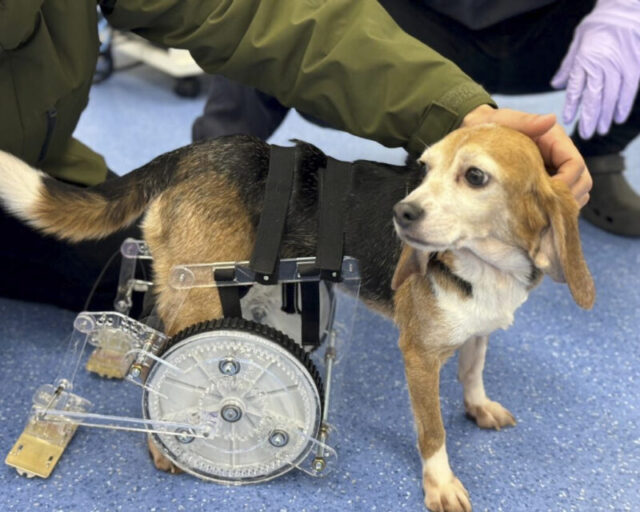
*Photo provided by Okayama University of Science
Regenerative medicine + rehabilitationRegenerative medicine, which restores lost organs and bodily functions, has brought revolutionary changes to the medical field and has enabled treatments for diseases that were previously difficult to address. Traditionally, rehabilitation has been positioned as a means of restoring function after surgery or maintaining function. However, in stem cell transplantation, performing rehabilitation simultaneously can enhance regenerative effects, and rehabilitation is expected to become one of the treatment options.