
Long Interview with Tsutomu Jinji of NEXTBASE
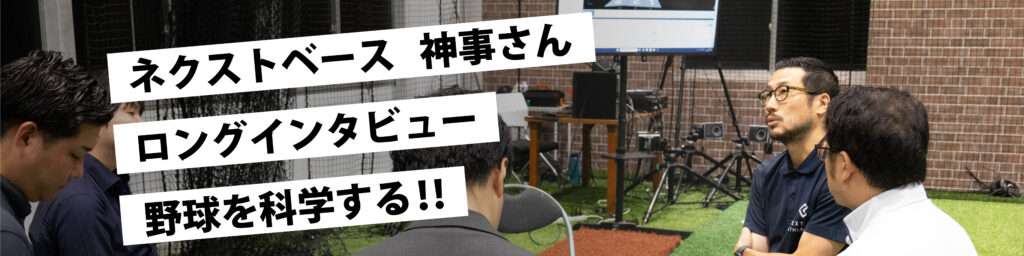
An In-Depth Interview Lasting Over 90 Minutes
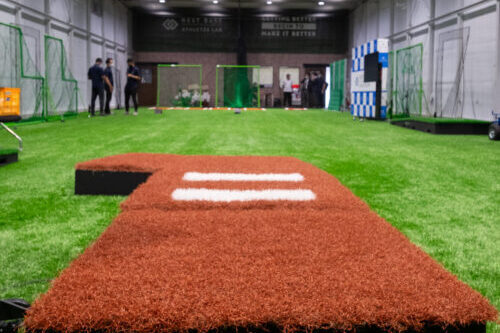
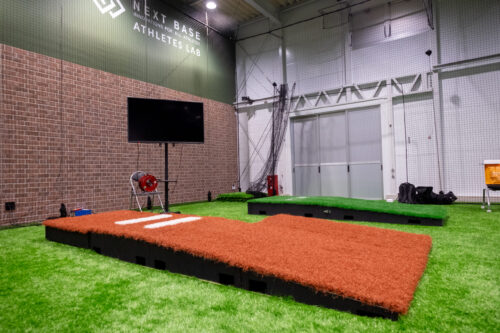
NEXTBASE Co., Ltd. opened the “NEXTBASE ATHLETES LAB,” Japan’s first privately operated sports science R&D center dedicated to supporting athlete development, on August 27, 2022, in Ichikawa City, Chiba Prefecture. In preparation for the opening, various motion measurement systems were installed, including force plates manufactured by Tec Gihan.
Now, approximately one year after its launch, we interviewed Senior Principal Researcher Tsutomu Jinji about the current situation, future outlook, and the role of force plates at the LAB.
Although the interview ran far longer than scheduled, we have selected and summarized the key highlights.
Scientific Decision-Making Is Advancing
Once again, could you tell us about NEXTBASE’s business activities and the role of the LAB?
【Jinji】
As a company, one of our key approaches toward our mission—“bringing smiles to people involved in sports”—is sports science. The question is how to deliver sports science to the general public who participate in sports, especially children. In the past, coaching was often based on a “guts and grit” mentality, and there was a tendency toward illogical instruction.
However, with recent advances in IT technology, things that were previously invisible have become measurable. We now live in an era where athletic performance can be visualized quantitatively through numerical data. As a result, coaching that once relied on abstract expressions or精神論 (mental/spiritual arguments) is being replaced with feedback based on quantified data, and traditional instruction methods are beginning to evolve.
We provide feedback services based on highly accurate measurement data. Today, many professional baseball players visit the LAB to enhance their performance from a scientific perspective.
It seems you also offer services for individuals other than top athletes?
【Jinji】
Yes. It has been about one year since the (NEXTBASE ATHLETES) LAB was established, and not only top professionals but also amateur and high-level amateur athletes have been using the facility. Among them, the number of high school athletes has been particularly high. Because they face the time limit of Koshien, they are eager to identify their individual challenges and improve efficiently. Teams that have won or finished as runners-up at Koshien have also used our services, which clearly shows that the times are changing.
Many high school and junior high school athletes visit with their parents. Recently, the father of a returning athlete excitedly reported to me, “He hit 140 km/h in his last game!” The smile on his face at that moment left a strong impression on me (laughs). The application of sports science is highly effective for performance improvement, and I feel that more people are becoming aware of its benefits. Fortunately, individuals with this kind of awareness are increasingly using the LAB, and our facility maintains a high utilization rate.
In addition, for those who cannot visit the LAB, we wanted them to experience the benefits of sports science as well, so we developed a smartphone application called “Spo+Shot.” The app measures pitching velocity, exit velocity, and launch angle, and it is widely used, particularly among junior high and high school students. Opportunities to see Shohei Ohtani’s exit velocity and launch angle have gradually increased, and there is an interesting aspect in being able to compare one’s own abilities numerically. The app also includes a competitive feature, allowing users to enjoy practicing while competing against others.
In the United States, scientific coaching and feedback systems are already well established.
Would you say NEXTBASE was the first to launch a facility of this scale in Japan?
【Jinji】
Yes, I believe so. One distinguishing feature is that we operate as a private facility. Previously, there have been institutions such as universities or the Japan Institute of Sports Sciences, but those tend to have a strong research orientation, where athletes participate as research subjects. They do not necessarily provide sufficient feedback, nor do they prescribe training programs. Until now, there has been no facility offering sports science–based services specifically aimed at improving athletic performance. In that sense, I believe this is the first facility of its kind in Japan.
Toward Educating the EducatorsAlthough you work with sports beyond baseball, such as golf and soccer,
you seem to place particular emphasis on baseball. Was there a specific reason for that?
【Jinji】
My own experience playing baseball had a significant influence. At the time, I genuinely enjoyed improving on my own and worked creatively to get better. However, as the competitive level increased, I was increasingly forced by coaches to follow prescribed methods, and baseball gradually became less enjoyable.
One of the most compelling aspects of sports is the process of achieving something you previously could not do. The joy lies in exploring and discovering solutions through your own body. Having experienced one-sided and compulsory coaching, rather than being encouraged to think and experiment independently, became the starting point of my current work.
I feel that similar situations have occurred in many sports, not just baseball.
【Jinji】
That’s true. I also suffered injuries to my shoulder and hip, which eventually prevented me from continuing baseball. From that point on, I gradually began to consider pursuing a path as a coach. In my fourth year at university, I even took the teacher certification examination. However, I realized that if I became a teacher without sufficient knowledge of coaching, I might cause athletes to go through the same experiences I had. I decided to pursue further research and aim to become someone who could educate coaches themselves, which led me to enroll in graduate school.
Selection, Focus, and Weighted FeedbackProviding feedback to athletes based on scientific results can be challenging. Is there anything in particular that you keep in mind?
【Jinji】
Ultimately, improvement is what matters most. To achieve that, it is essential to maintain a cycle of measurement → evaluation → training. Since the athlete’s primary responsibility is training, I believe it is not necessary for them to understand every detail of the measurement and evaluation process.
In today’s sports world, some people still believe there is a “magic” training method that works for everyone. In reality, however, each athlete has different challenges, and therefore requires a different training approach. A tailor-made training program is inherently the safest and fastest way to improve. That is why the cycle of measurement → evaluation → training is necessary, yet I feel this understanding has not fully progressed within the sports community.
For example, when you get a pair of glasses made, what is the first thing you do? You measure your eyesight, right? The lenses are then fitted according to those measurements. However, the sports world does not operate this way. Instead of measuring first, athletes are often handed a “recommended” method and told it is good for them. The proper approach should be to measure and evaluate first, then explore solutions based on those results. Instead, there is a tendency to think that if you go to a certain person, they will simply make you better.
Those who provide data-driven services must measure accurately, evaluate properly, and offer the correct “glasses” tailored to the individual. That is what proper implementation and utilization of data means. It’s about looking at the data—if the right eye is 0.2 and the left eye is 0.5—then asking, how do we adjust from there?
That’s very easy to understand! (laughs) It really is the standard process at an optical shop.
【Jinji】
Dialogue is also important. At an optical shop, you’re asked questions like, “Can you see clearly at a distance?” or “Can you see well up close?” They assess the situation and provide glasses accordingly. However, that kind of individualized communication is often lacking in the sports world.
At the LAB, coaches frequently accompany athletes. These are coaches who are genuinely interested in sports science and are studying on their own. I personally learn a great deal from the depth and variety of their practical knowledge. Perhaps one of the defining features of this LAB is the fusion of scientifically grounded evidence with the “practical wisdom” of on-field coaches. Although it is still a future goal, we hope to systematize the knowledge accumulated at the LAB and eventually establish an academy dedicated to developing coaches.
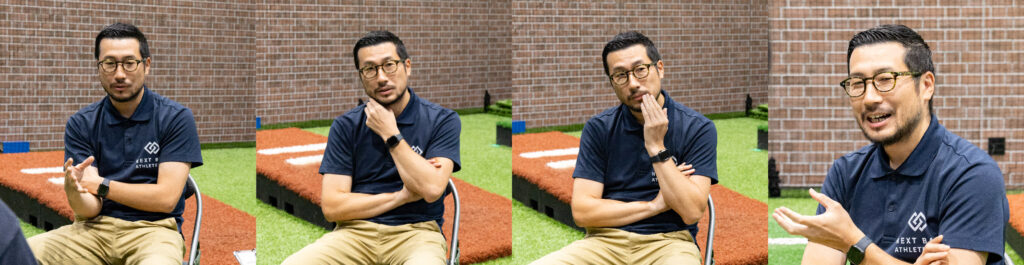
People Are Essential—As Are the Force Plate and Motion Capture
If you were to establish another LAB, what would be absolutely indispensable?
【Jinji】
At a minimum, the equipment and environment we currently have would be necessary—and above all, people.
Ultimately, we must go beyond measurement and proceed to training. Measurement alone is not enough. It’s one thing to say, “Your ball’s spin rate was this, the spin axis was this, and you are this far from the average.” But unless we also address questions such as “How can this pitch be utilized effectively?” or “What should be improved to throw a better pitch?”, we cannot say that the data is truly being utilized.
For that reason, the LAB has full-time performance coaches certified in Strength & Conditioning (S&C), as well as conditioning coaches who are licensed physical therapists. Based on evaluated data, they prescribe individualized training programs.
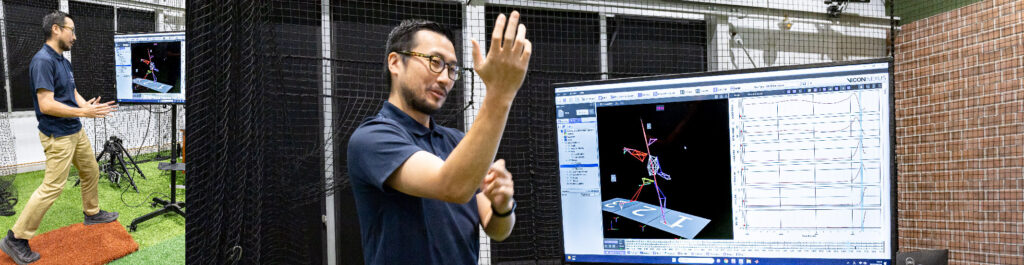
As for representative measurement systems, we use a motion capture system, force plates, Rapsodo (a ball trajectory measurement and analysis device), and high-speed cameras. These tools allow us to objectively visualize performance as numerical data. Ultimately, from a biomechanical motion analysis perspective, if you have a motion capture system and force plates, you can even calculate ball spin. Finger motion can also be measured by placing markers on the fingers.
Reliability as a Domestic Manufacturer
Why did you decide to adopt Tec Gihan’s force plates?
【Jinji】
I was aware that Tec Gihan’s force plates were being used at the National Institute of Fitness and Sports in Kanoya. There, measurements were conducted through a soil mound. When building the LAB, we knew that we would not use force plates alone—we also needed a pitching mound. Their experience in constructing an integrated measurement environment was a significant advantage for us.
Thank you. Yes, rather than simply providing force sensors or force plates alone,
we strive to consider the entire measurement environment, including peripheral equipment and fixtures.
【Jinji】
We also had expectations regarding the flexibility of working with a domestic manufacturer.
When building this facility (the LAB), there were no existing models to reference. We had many operational concerns. For example, when athletes pitch wearing spikes, would a turf mound be sufficient? Would we need to prepare a soil mound instead? Since we also conduct batting measurements, we had to consider the effort required to remove and reinstall the mound as well.
During the preparation of the mound, we held numerous prior meetings to discuss details such as stiffness, height alignment in relation to the motion capture system, and the angle of the force plates.
We also conducted preliminary experiments at Kokugakuin University using a partially artificial turf mound.
【Jinji】
Yes, we did. Those experiences themselves have become part of our know-how. As a result, we arrived at the current setup. Athletes can now pitch comfortably on the turf mound while wearing spikes without any discomfort. Over the past year, we have experienced no issues with the force plates, both in terms of data acquisition and noise. It is also reassuring to know that we can rely on proper after-sales service should anything arise.
Thank you very much. We will continue striving to improve!
【Jinji】
Price is another factor. As a private company, we must ensure cost recovery, so domestic manufacturers are also strong from a pricing perspective.
How Is the Back Leg Driving? This Is Where the Force Plate Becomes Essential
In what situations does the force plate contribute to feedback?
【Jinji】
We create what we call a “logic tree” to conduct structural performance analysis. First, we must define what constitutes a “mechanically sound movement.” At the LAB, we believe that increasing the energy transferred to the ball is critical.
Energy consists of potential energy, translational energy, and rotational energy. Translational energy includes velocity, and rotational energy includes angular velocity. A ball with greater total energy has higher velocity and higher spin rate. Therefore, we define such a pitch as mechanically superior.
To increase the ball’s energy, we have found that the translational velocity of the center of mass is essential. When the center of mass velocity increases, the total energy of the body increases. That energy is then efficiently transferred through the upper arm, forearm, hand, and ultimately to the ball. The fundamental source of that process is the velocity of the center of mass.
The center of mass velocity reaches its peak immediately after the lead leg makes contact with the ground. Therefore, how much the center of mass velocity can be increased before foot contact is crucial. What contributes to this increase is the “drive action of the back leg.” The force plate enables us to quantify how the back leg is pushing.
To generate greater velocity, a large force must be applied over a longer period of time. While it is relatively simple to explain differences in center of mass velocity using impulse, the specific movement patterns that produce acceleration vary from athlete to athlete. Even when performing inverse dynamics calculations, we observe several distinct patterns in how the hip and knee joints are utilized.
So the force plate allows you to quantify the fundamental source of energy generation.
【Jinji】
In response to the question of “how to push,” we evaluate force plate data to determine whether the issue lies in the direction of force, the magnitude of force, or the duration of force application. We assess these factors in a structured manner—similar to grading categories A through D—and provide feedback to the athlete.
Athletes who cannot sufficiently increase translational velocity tend to have lower ball velocity. When discussing this with them, we sometimes uncover underlying issues, such as a prior hip injury. In fact, one athlete recently returned for re-measurement after telling us his condition had improved. (laughs)
By constructing a logic tree in this way, we can mechanically extract movement errors. We then organize whether the error stems from a physical capacity issue, such as strength or power output; a conditioning issue, such as pain or limited range of motion; or a skill-related issue. Based on that classification, we prescribe training programs from the perspectives of Strength & Conditioning, physical therapy, and skill training. At this point, we can identify all movement errors! (laughs)
How have the athletes, coaches, and managers who visit reacted?
【Jinji】
Those who are not accustomed to looking at data often don’t know where to focus. Well, that’s understandable (laughs). Even if we consider only biomechanical variables—at present, we even calculate energy—there are 112 output data points.
That many?!
【Jinji】
If you ask whether all of them are important, I would say yes, they are all important—but there are priorities. Since I also played baseball, I have a general sense of the movement sensations experienced by athletes and coaches. Some data points are closer to their physical sensations, while others are more abstract. When we start by explaining the data that aligns closely with their sensations, their understanding improves much faster.
However, athletes who regularly think about their mechanics tend to grasp the data very quickly, which often surprises me. Providing feedback involves a certain level of tension, but it is also enjoyable. I sometimes feel that these feedback sessions become opportunities for athletes to study anatomy and mechanics. Even athletes who initially struggled to understand the numbers gradually begin asking proactive questions such as, “How does this compare to last time?” Because they learn using their own data, I believe the educational impact of feedback is extremely high.
Energy Evaluation Made Possible by High-Resolution AnalysisYou mentioned energy analysis as one of your unique services. Could you elaborate further?
【Jinji】
In pitching mechanics, injury prevention is a critical issue. Previous research has reported that pitchers with higher ball velocity tend to exhibit greater elbow varus torque. This varus torque is associated with the risk of injury to the medial elbow ligament, meaning that ideally, pitchers would throw with lower varus torque.
However, varus torque is considered a byproduct of increased shoulder internal rotation torque, which is necessary for generating higher ball velocity. Traditionally, it was believed that increasing velocity while preventing injury was inherently contradictory. Yet, when we actually measure professional baseball players at the LAB, we find several athletes who achieve both. (laughs) They throw close to 150 km/h, yet their elbow varus torque is extremely low.
We collect data at 1,000 frames per second, apply specialized filtering techniques, and perform inverse dynamics calculations starting from the ball. We conduct motion analysis very rigorously. I believe it is precisely because of this “high-resolution analysis” that we are able to observe these findings.
We have discovered that athletes who can simultaneously improve performance and reduce injury risk exhibit distinctive energy flow characteristics. In pitching, evaluating energy and its time derivative—power—allows us to represent the generation and absorption of mechanical work. It is critical to efficiently transmit the energy flowing through the arm without excessive absorption. We are now able to prescribe training that enhances energy transfer without increasing elbow varus torque.
As we gain clearer insight into pitching forms that reduce injury risk, we hope to collaborate more closely with medical institutions in the future. Even if an athlete recovers from elbow pain through conservative treatment, continuing to throw with the same mechanics may lead to re-injury. By conducting biomechanical motion analysis, we can evaluate why pain occurs and guide athletes toward mechanics that do not provoke pain. We aim to further develop services in this area.
As a Company, at the Center of Sports Science; As an Individual, Going DeeperCould you share your future outlook for NEXTBASE and for yourself?
【Jinji】
As a company, we want to continue expanding the LAB. At the same time, we hope to increase the number of people who can directly handle data, coordinate data, and possess mechanical knowledge. From that perspective, I would like to establish something like an academy.
While expanding outward, we must also maintain depth. Personally, I need to continue digging deeper into my own research, so I plan to write more academic papers. (laughs)
This is something that can only be achieved as a team. It would be impossible within my university laboratory alone, especially since we do not have a graduate program. We have PhD-level biomechanical researchers, certified S&C specialists, individuals with master’s degrees in biomechanics, and physical therapists. I could never accomplish this alone, and unexpected discoveries emerge precisely because we work as a team. It truly demonstrates the strength of teamwork.
That is why role allocation is important. My role is to deepen the research. Others operate the LAB. Our CEO and other team members promote and expand the business. If we can continue functioning as a cohesive team, I believe we can achieve our goals.
Thank you very much for sharing such valuable insights.
This turned into a much longer interview than originally planned (laughs).
【Jinji】
Thank you very much. I look forward to working with you again.
Likewise, thank you very much!
Bonus Section: A Deeper Look into Pitching Biomechanics
【Jinji】
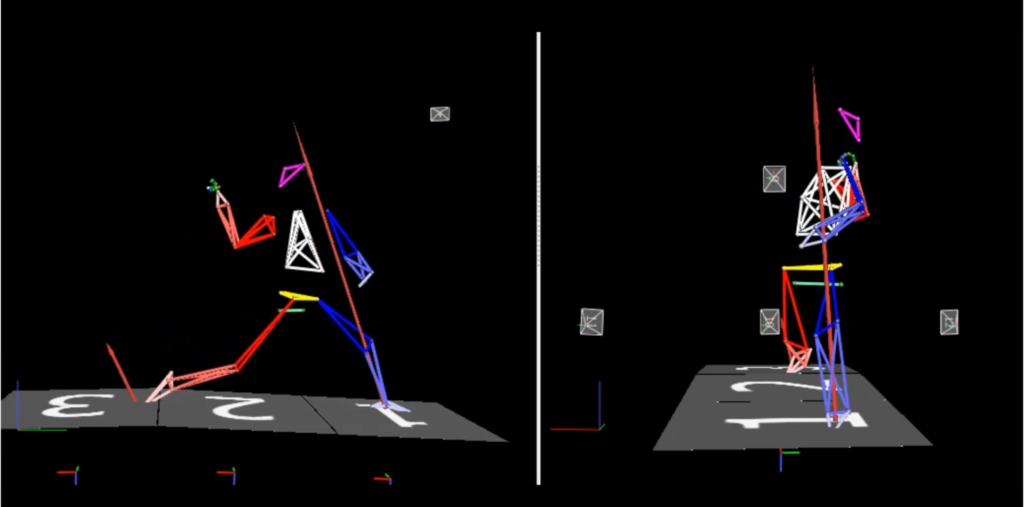
During the translational phase of motion, the force vector of the back leg is directed toward the catcher. Once the lead leg makes foot contact, the vector shifts toward the second-base side.
(*See attached figure*)
Athletes who struggle to generate velocity often have an unfavorable force direction (for example, standing too upright). They are unable to fully direct force toward the intended direction of motion, and as a result, ball velocity does not increase.
Posture is also extremely important. If the pelvis is excessively closed at foot contact, it takes longer to rotate forward, resulting in energy loss. Both temporal factors and force-related factors must be understood.
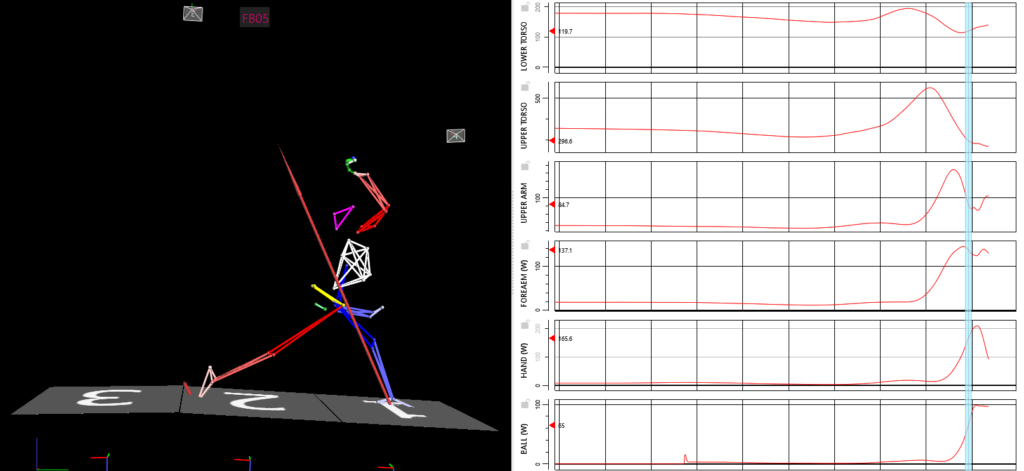
Regarding energy flow, the following graph shows the magnitude of energy itself, measured in joules.
Energy peaks sequentially from
[Pelvis (LOWER TORSO)] → with a slight time lag → [Thorax (UPPER TORSO)] → [Upper Arm (UPPER ARM)] → [Forearm (FOREARM)] → [Hand (HAND)] → and almost simultaneously to the [Ball (BALL)].
(*See attached figure*)
Pelvis ➡ Thorax
Immediately after foot contact, pelvic energy reaches its maximum, followed by peak energy in the thorax. Thoracic energy becomes approximately three times greater than pelvic energy. If the lead leg collapses at this stage, force rapidly decreases. Ideally, the lead knee should extend firmly to ensure proper force transmission. If this does not occur, energy cannot be effectively transferred to the thorax (and instead returns toward the lower body). No matter how much energy is generated earlier in the sequence, it cannot be transmitted to the upper body. Athletes with poor transmission need to use the lead leg more rigidly and develop spring-like qualities.
Thorax ➡ Upper Arm
Energy decreases to roughly one-third at this stage. Athletes with poor transmission may have underlying shoulder issues, in which case a physical therapist should intervene. If no structural problem exists, the issue may lie in improper shoulder joint mechanics or insufficient strength. In cases of insufficient strength, pull-up exercises—targeting shared muscle groups—can be an effective training method.
Upper Arm ➡ Forearm
Forearm energy reaches approximately 90% of upper arm energy. In athletes with poor transmission, excessive eccentric contraction of the biceps brachii may be occurring. Some of these athletes may also be overly concerned with control. When discussing transmission inefficiencies in depth, we have sometimes found that their coach strongly disliked walks, influencing their mechanics.
Hand ➡ Ball
Athletes with poor transmission at this stage often exhibit excessive finger extension. Increasing finger stiffness is important. Improving ball grip technique is also one possible solution.
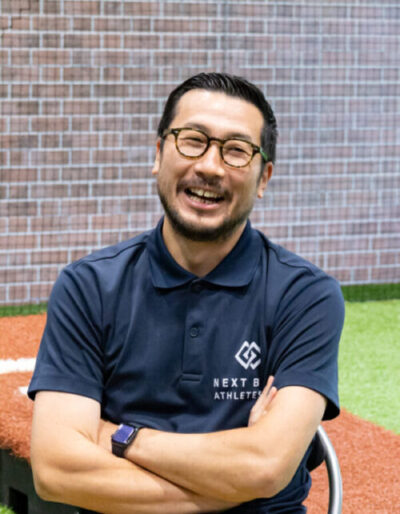
Tsutomu Jinji
Ph.D. (Physical Education). Associate Professor in the Department of Health and Physical Education, Faculty of Human Development at Kokugakuin University. Former researcher at the Japan Institute of Sports Sciences (JISS). His primary research theme is the biomechanical analysis of pitching motion. He received the Outstanding Paper Award from the Japanese Society of Biomechanics for his research clarifying how ball spin axis orientation and spin rate influence aerodynamic forces. At the Beijing Olympic Games, he supported the Japan Women’s National Softball Team and contributed to their gold medal victory. Until 2016, he was a member of the Strategy Office R&D Group of the Tohoku Rakuten Golden Eagles, promoting team performance enhancement. He currently conducts motion analysis and pitch design for many professional baseball players.