
[Interview] ITOKI Ergonomics
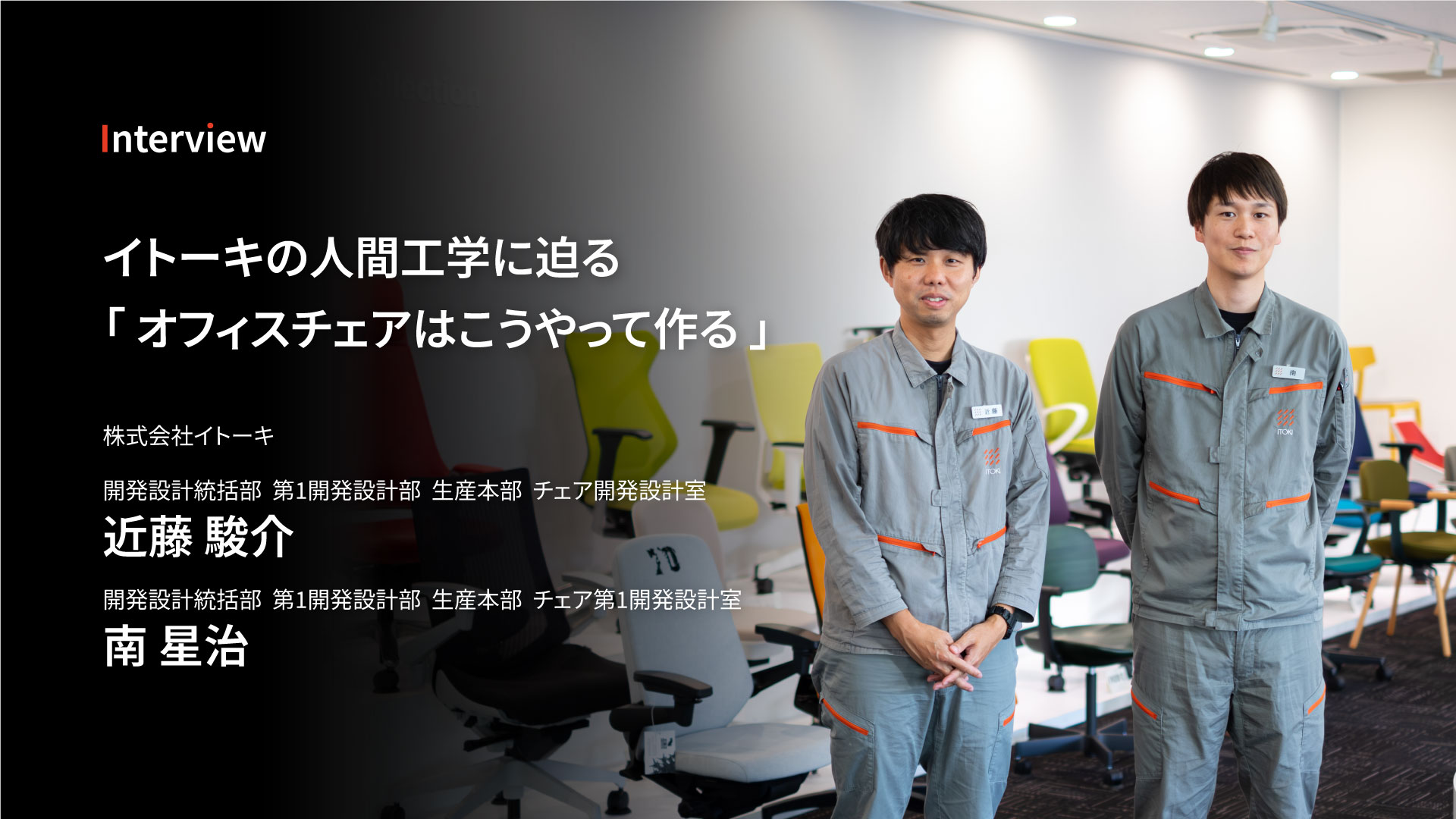
ITOKI Corporation is one of Japan’s leading office furniture manufacturers, founded in 1890. Recently, the company introduced sensors from Tech Gihan for office chair development and ergonomics research, and released the product “vertebraº³ WOOD,” which reflects the measured data. We spoke with Mr. Kondo from the Chair Development Design Office No.2 and Mr. Minami from the Ergonomics Laboratory about the key points of this office chair development, how the sensors were utilized, the story behind the development, and future prospects.
History of ITOKI / History of the Vertebra Chair
Could you tell us about the history of ITOKI?
【Minami】
The company was founded in 1890 as Ito Ki Shoten, and in December 2024 it celebrated its 135th anniversary. The Vertebra chair also has a long history. In 1980, we collaborated technically with Open Ark (Netherlands), and the product originally started as a model modified to suit the body size of Japanese users.
【Kondo】
The Vertebra series has been updated several times, and we really feel that there are fans who continue to use each generation. When I first joined the company, I even visited customers who said, “I’ve been using Vertebra for years but it’s not working well anymore—can you repair it?” or “I’d like to maintain it and keep using it.”
【Kondo】
They are also installed in many government offices, so you might have seen one in a municipal office.
【Minami】
When it was first released in 1980, a steel chair cost about 10,000 yen. The first Vertebra chair was sold for around 50,000 yen, which was relatively expensive at the time, but it received so many orders that it reportedly led to the construction of our current chair factory (Shiga Plant No.1). (laughs)
【Kondo】
This is something I heard from senior colleagues, but the factory was originally designed mainly to produce Vertebra chairs as efficiently as possible.
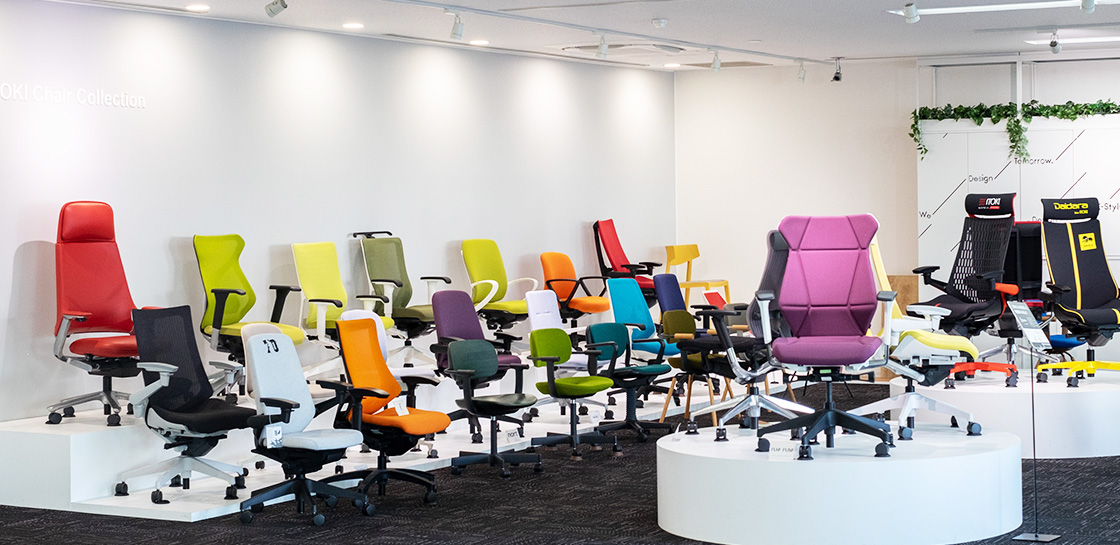
ITOKI Chair Collection
A New Concept Working Chair Using Wood: vertebraº³ WOOD
What inspired the development of vertebraº³ WOOD?
 【Kondo】
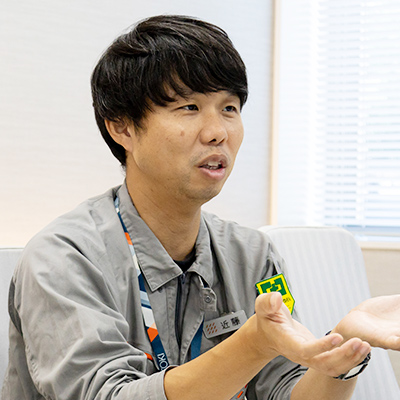
The Vertebra03 released in 2020 was designed by another engineer. I became responsible starting with vertebraº³ WOOD. The background for the wood version is the recent trend of office environments becoming more casual and café-like. Wood is increasingly used in office spaces and wooden furniture has become more common. Designer Fumie Shibata also supported this concept. She originally designed Vertebra03. This time the chair is made by carving solid chestnut wood, and that part was handled by Karimoku Furniture.
The previous Vertebra series had cushions, but this one is made from wood. Did that change the development points?
【Kondo】
Since the seats we developed had always been cushion-based, we initially wondered how we should approach this. We also wondered whether a comfortable seat could really be achieved with hard wood. Karimoku Furniture has extensive experience making wooden seats for dining chairs, so we referred to their expertise. However, dining chairs and working chairs are used differently, so we needed a different approach. Simply copying the cushion shape would probably not work. That made us wonder: what shape does the seat take when a person sits on a cushion? Just then I noticed Minami working nearby and discovered the seat tracer. (laughs)
The seat tracer wasn’t originally introduced for vertebraº³ WOOD development, right?
【Minami】
Actually, we were originally considering another work chair project and wanted to design its seat shape. Since the seat tracer had just been introduced, we thought we might as well try using it here too. At the time we were still experimenting with it, so I asked Mr. Kondo to wait many times. (laughs)
Revising the Seat Shape Using Seat Tracer Measurements
【Kondo】
Originally vertebraº³ WOOD was exhibited as a prototype at ORGATEC Tokyo in June 2022. Another design engineer created the prototype model. Later, when we decided to move toward mass production and commercialization, development was assigned to the Chair Development Design Office No.1. Because wood does not sink like cushions, it initially felt somewhat lacking compared with cushion seats. While trying to improve that, we eventually connected the process to measuring seat shape during sitting using the seat tracer.
The seat shape of Vertebra has been carefully researched since the first generation. During the development of Vertebra03, we scanned the seat shape of the original model and conducted sensory evaluations, which reaffirmed how well it had been designed. For this reason, we believed the comfortable seat shape of the Vertebra should be carried over into the WOOD model. After reviewing the seat shape, the final mass-produced version changed quite significantly from the prototype.
Without the seat tracer, the current seat shape probably would not have been possible. It also allows us to explain things logically, making it a very useful measurement device for promotional explanations.
At the Tech Gihan booth during Automotive Engineering Exposition 2025 (Yokohama), we displayed the prototype and the final product side by side. Visitors were surprised when they compared them.
【Kondo】
Really? It’s a pleasant surprise that more people than I expected think it’s good. (laughs)
【Minami】
It also received awards both inside and outside the company. It won “Best of the Best” at the Red Dot Design Award 2024.
【Kondo】
Since it’s a solid piece of wood, people might imagine it wouldn’t move much and that the comfort would be limited. Combining wood with ergonomics was a challenge, but I think we were able to present one answer with this product.
-
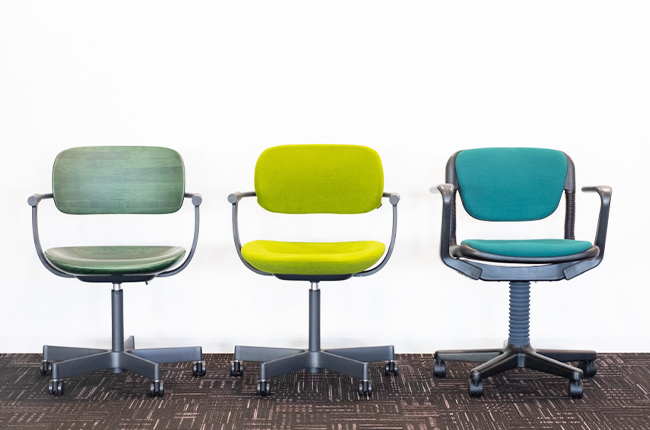
Vertebra chair history (from left: vertebraº³WOOD / Vertebra03 / First-generation Vertebra) -
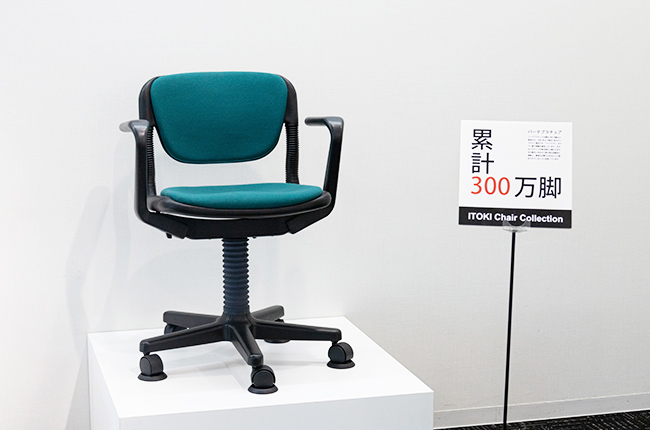
First-generation Vertebra
How Chair Seat Shapes Are Developed
How do you use measurement data in chair development?
【Minami】
We convert the shapes measured by the seat tracer into CAD data. Before making the wooden version, we first create a model using rigid foam to confirm the shape, and then produce the wooden version. We repeat this process to refine the shape.
At exhibitions, people of many different body sizes sat on the chair and most said it felt comfortable. Why is that?
【Kondo】
If you design only for smaller people, larger users may feel cramped. So we paid attention to ensuring that larger people would not feel restricted. Because the material is hard, narrowness is felt more directly. From a technical perspective, there are two pointed bones in the pelvis called the ischial tuberosities. Their width varies slightly depending on body size but does not change dramatically. We designed the shape while focusing on that point.
【Minami】
The amount of soft tissue varies among individuals, but the size of the pelvis itself does not vary as much as height. If the key hard support points are properly supported, the surrounding shape naturally fits. As Mr. Kondo mentioned, if the key support points are designed appropriately for larger people, smaller people will also find it comfortable.
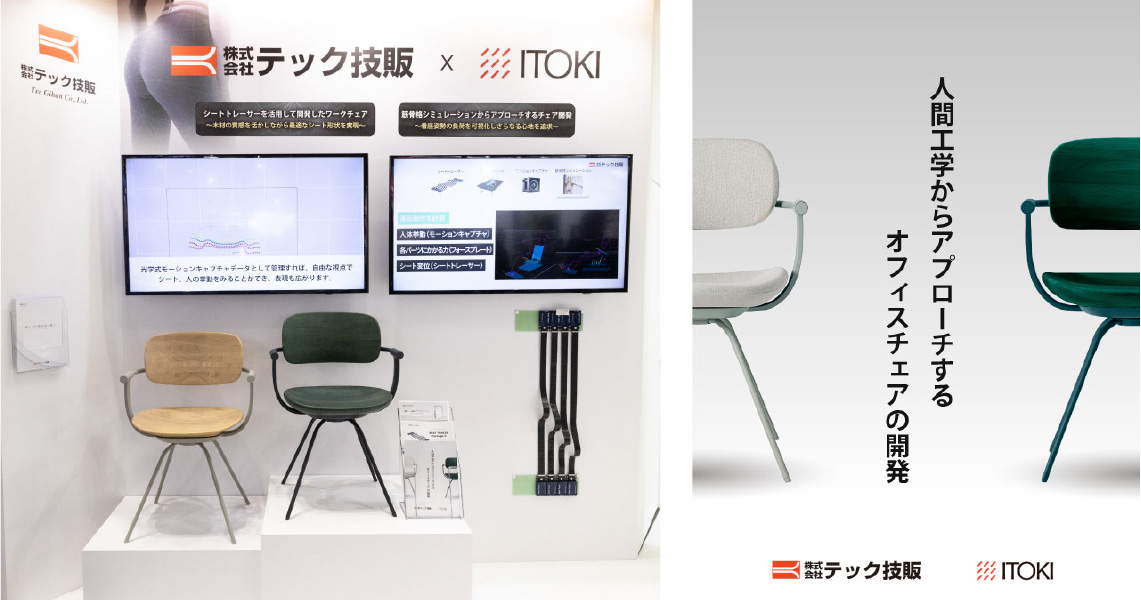
Automotive Engineering Exposition 2025 (Yokohama) (Left: Prototype / Right: vertebraº³WOOD product)
ITOKI Ergonomics in a Changing Work Environment
“Sitting posture” appears frequently in ergonomics research. Is it a fundamental theme?
【Minami】
Yes, I think so. It is said that Japanese people spend the longest time sitting in the world. Many studies on sitting focus on its impact on health.
【Kondo】
Among office furniture, chairs are what people interact with for the longest time, so they have a significant influence on people.
Work styles changed significantly before and after COVID-19.
【Kondo】
Yes. As working from home became more common, many people realized that working eight hours on a dining chair is difficult. When people tried bringing office chairs home, they sometimes felt too large or bulky. In that sense, Vertebra03 might have been just the right balance. It has also been popular with individual customers, not just corporate clients.
The Importance of Ergonomics
As offices evolve from Office 1.0 to 2.0 and 3.0, does ergonomics become more important for ITOKI?
【Kondo】
Yes, it’s something we are focusing on strongly right now.
【Minami】
We consider many aspects from a human-centered perspective, not just chairs but also the relationship between people and office spaces. As we started conducting more fundamental research using the seat tracer, we established the Ergonomics Laboratory to emphasize this effort as part of ITOKI’s technical capabilities.
【Minami】
The activity of reviewing and digitizing ergonomics research also received the President’s Award.
【Kondo】
Previously we relied on pressure distribution measurements and sensory evaluations, but now we aim to strengthen explanations with data and numerical analysis using modern measurement equipment.
【Minami】
In past research, six types of support surfaces corresponding to various sitting postures were proposed and became the foundation of chair design. While they are not incorrect, we want to explore further. With new measurement devices, motion capture, force plates, and simulation technologies, we can analyze data more thoroughly. Japanese body structures and work devices are also changing, so updates are necessary.
Balancing Function and Design in Chair Development
What makes a good chair or a bad chair?
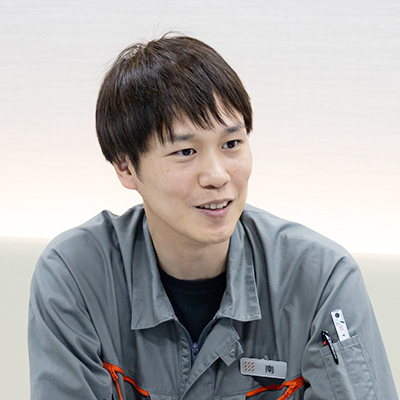 【Minami】
Maintaining the same posture for too long is not good because blood circulation becomes restricted. Office chairs are designed for long periods of work, but not for staying in the same posture. The rocking function of office chairs allows a seamless transition between working posture and resting posture, helping maintain blood circulation and reduce fatigue.
【Kondo】
Work devices have also changed—from desktops to laptops and tablets—so working postures have evolved. We want to reconsider whether traditional “good posture” is still the best today. However, ergonomics alone is not enough; appearance is also important. Chairs are interesting because functionality and design are closely linked.
【Minami】
Chairs can also represent status or position. Sitting in a good chair can make you feel good, so design is very important.
【Kondo】
Ideally, a good chair is one that doesn’t assert itself too strongly and allows you to sit naturally.
Approaches to Product Development
How does product development usually begin?
【Kondo】
Sometimes development begins with an image or concept, and sometimes with price targets. For example, when competing with other companies’ product lines, price positioning can be crucial. For vertebraº³ WOOD, however, the goal was to create a new value not seen before. We developed the concept together with designer Fumie Shibata. After defining the concept and design, we determined the price range that customers would accept.
Seeking the Right Measurement Equipment
Besides the seat tracer, a custom force plate was also introduced. What measurements do you plan to conduct?
【Minami】
Currently we use the seat tracer, force plates, and motion capture to measure human posture during sitting and rocking movements. We then estimate loads on different body parts using musculoskeletal simulations. Tech Gihan has provided proposals and support tailored to our needs, including custom force plates designed for chair fixation and small special-shaped force plates for armrests. They also help coordinate synchronization and data integration across devices.
-
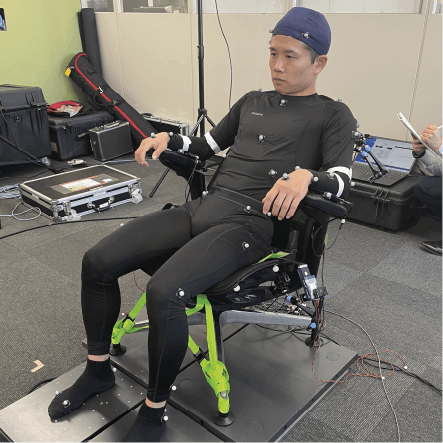
Seat Tracer × Force Plate -
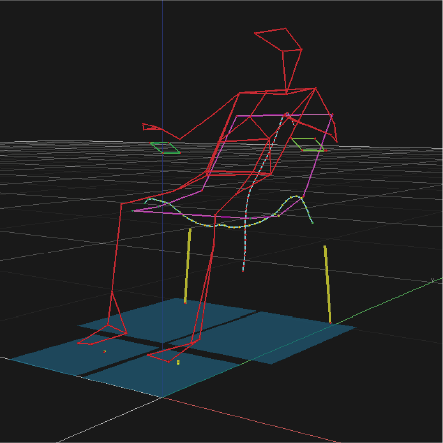
Motion Capture 3D View -
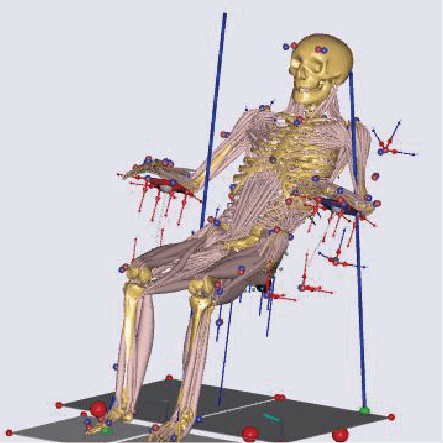
Musculoskeletal Simulation
ITOKI and Ergonomics: Creating Comfortable and Stylish Chairs
Could you tell us about your future outlook?
【Minami】
First, we want to increase the number of measurements. Currently we measure basic sitting posture, but we want to collect more patterns, such as leaning back, accumulate the data, and contribute to future product development.
【Kondo】
Personally, I rely a lot on intuition, not just digital data. But hearing people say a chair is comfortable and stylish—like with vertebraº³ WOOD—is the most rewarding thing for us. Our goal has always been to create chairs that are both comfortable and attractive.
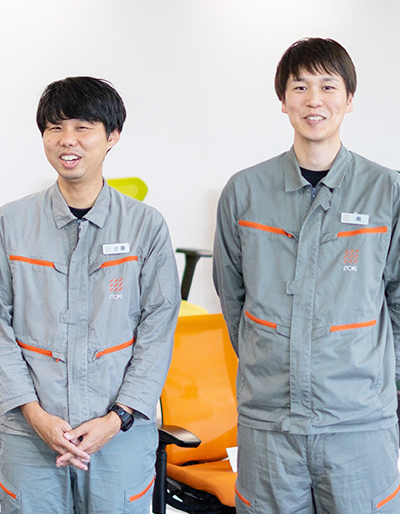
KONDO Shunsuke
Production Headquarters, Development & Design Division, Development Design Department No.1, Chair Development Design Office No.2
Joined the company in 2008
MINAMI Seiji
Production Headquarters, Development & Design Division, Development Design Department No.1, Chair Development Design Office No.1 / Ergonomics Laboratory
Joined the company in 2012