Optimization of Interdental Brushes
– Measuring the “Insertion Force” of Interdental Brushes –
Optimization of Interdental Brushes – Measuring the “Insertion Force” of Interdental Brushes –
Nippon Dental University College at Niigata Prof. Akiko Miyazaki
Background of measurement in the dental fieldIn dentistry, the effectiveness of plaque removal and prevention of periodontal disease has been extensively studied. However, the “appropriate amount of force” to apply has long depended on experience. For toothbrushes, studies have reported force ranges from several hundred grams to a few newtons (e.g., removal effectiveness and risk of damage to teeth and gums due to excessive force). However, in clinical practice, expressions such as “use gentle force” or “adjust to each individual” are commonly used, and specific numerical indicators are rarely provided.
For interdental cleaning, in addition to floss, interdental brushes are effective for removing plaque in interdental areas with a high risk of periodontal disease and have become a standard daily oral care tool. However, compared to toothbrushes, defining appropriate usage for interdental brushes is more difficult. In particular, regarding the force applied during insertion and cleaning, vague expressions such as “insert with appropriate force” or “insert smoothly without pain and move with slight resistance” are commonly used.
Why measure “insertion force of interdental brushes”?
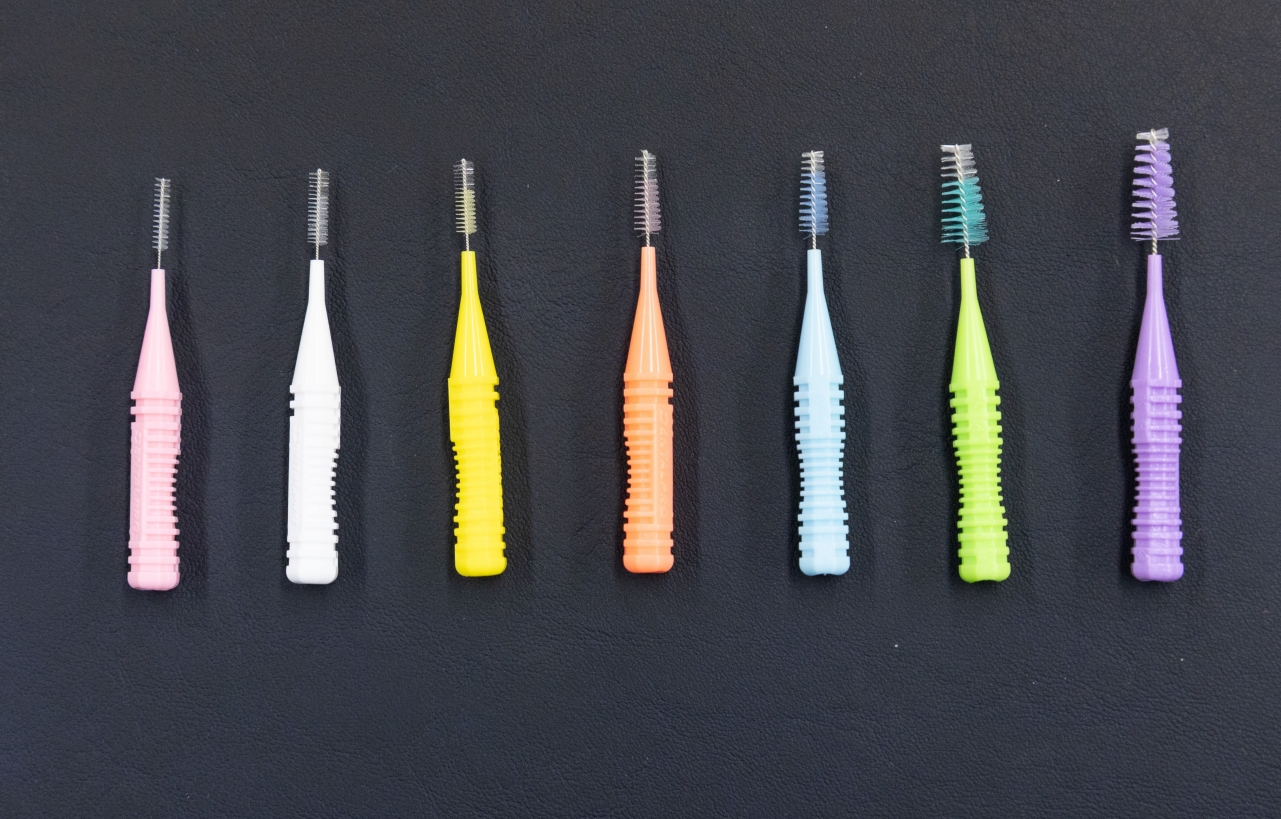
*Courtesy: Dental Pro Co., Ltd.Proper size selection and force control are crucial for interdental brushes. If the brush is too small, cleaning is insufficient; if too large, it may cause gingival injury or pain. In this study, the challenge of how to convey appropriate force to students and patients led to the idea of visualizing insertion force. By quantifying insertion force, the goal is to translate instruction into clear, numerical guidance. It has also been reported that cleaning efficiency varies depending on brush shape and usage, making the presentation of “appropriate force” highly valuable in clinical practice.
Measurement of interdental brush insertion force, previously difficult
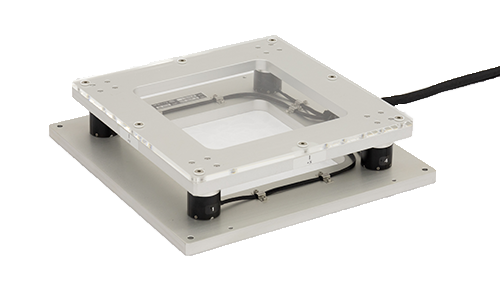
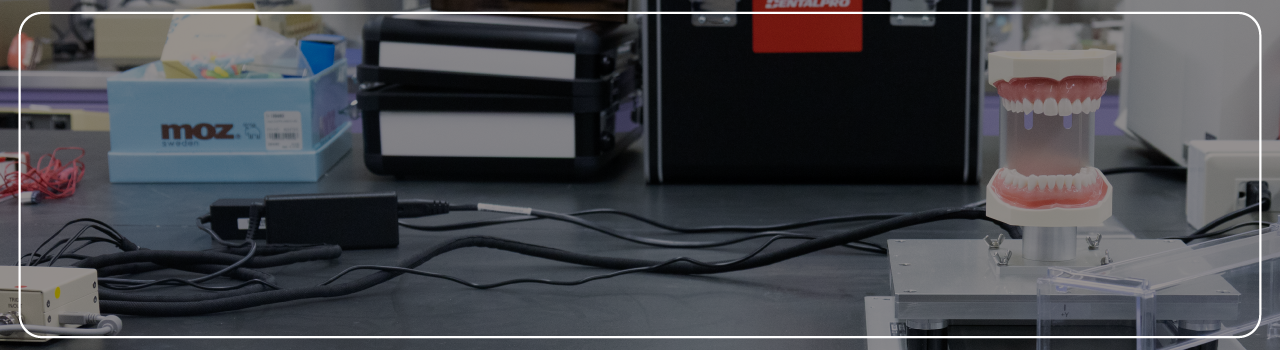
Because interdental brushes are very small, it is difficult to attach strain gauges directly, making force measurement challenging and previously unavailable in quantitative terms. Therefore, a jaw model was used, allowing load to be received on the model side. The model was firmly fixed to the top plate of a tactile force plate (TF-2020, rated capacity: 10N) with screw holes. The tactile force plate can measure input loads as six components (Fx, Fy, Fz, Mx, My, Mz), enabling the brush insertion force to be calculated as the resultant of Fx, Fy, and Fz.
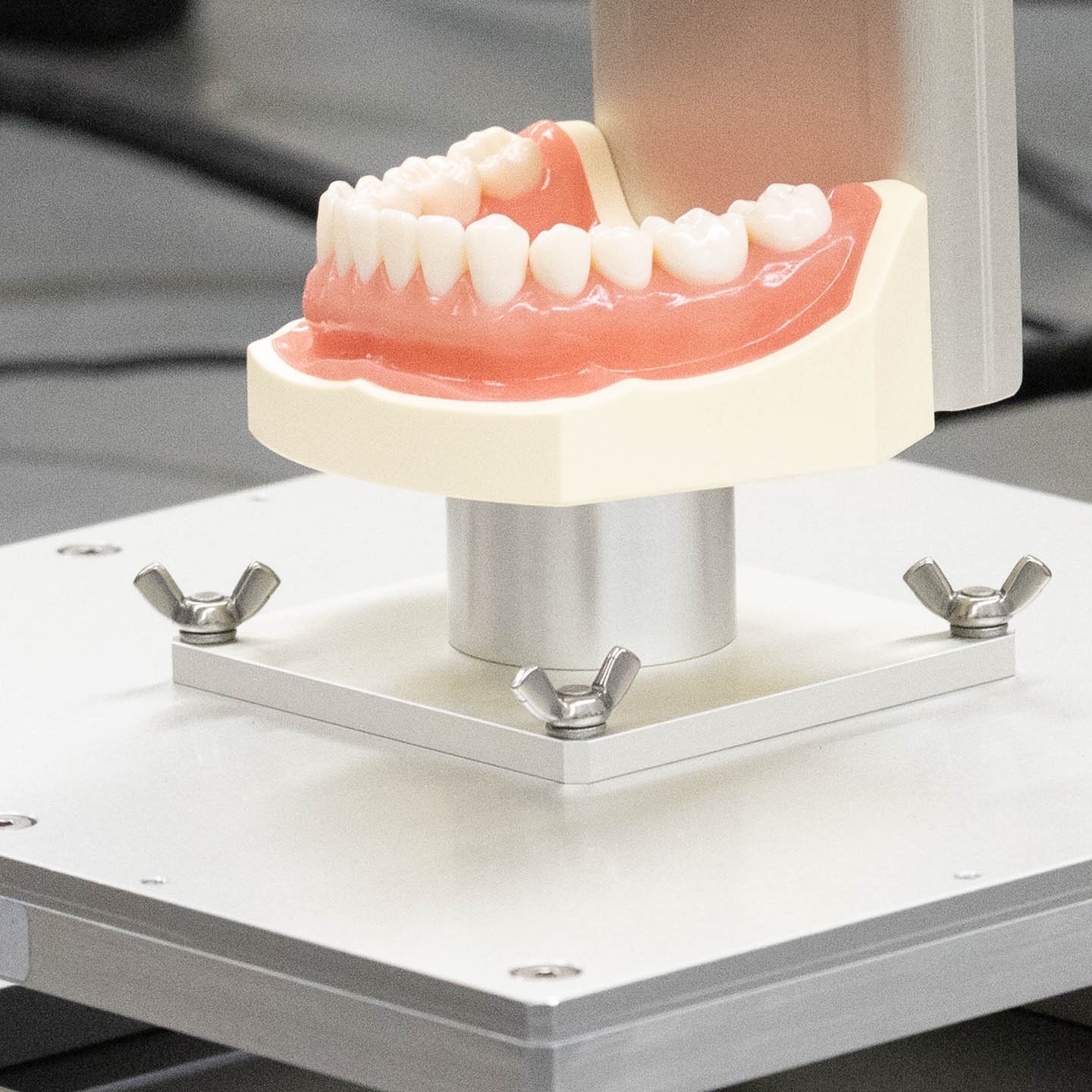 The model is securely fixed to the force plate
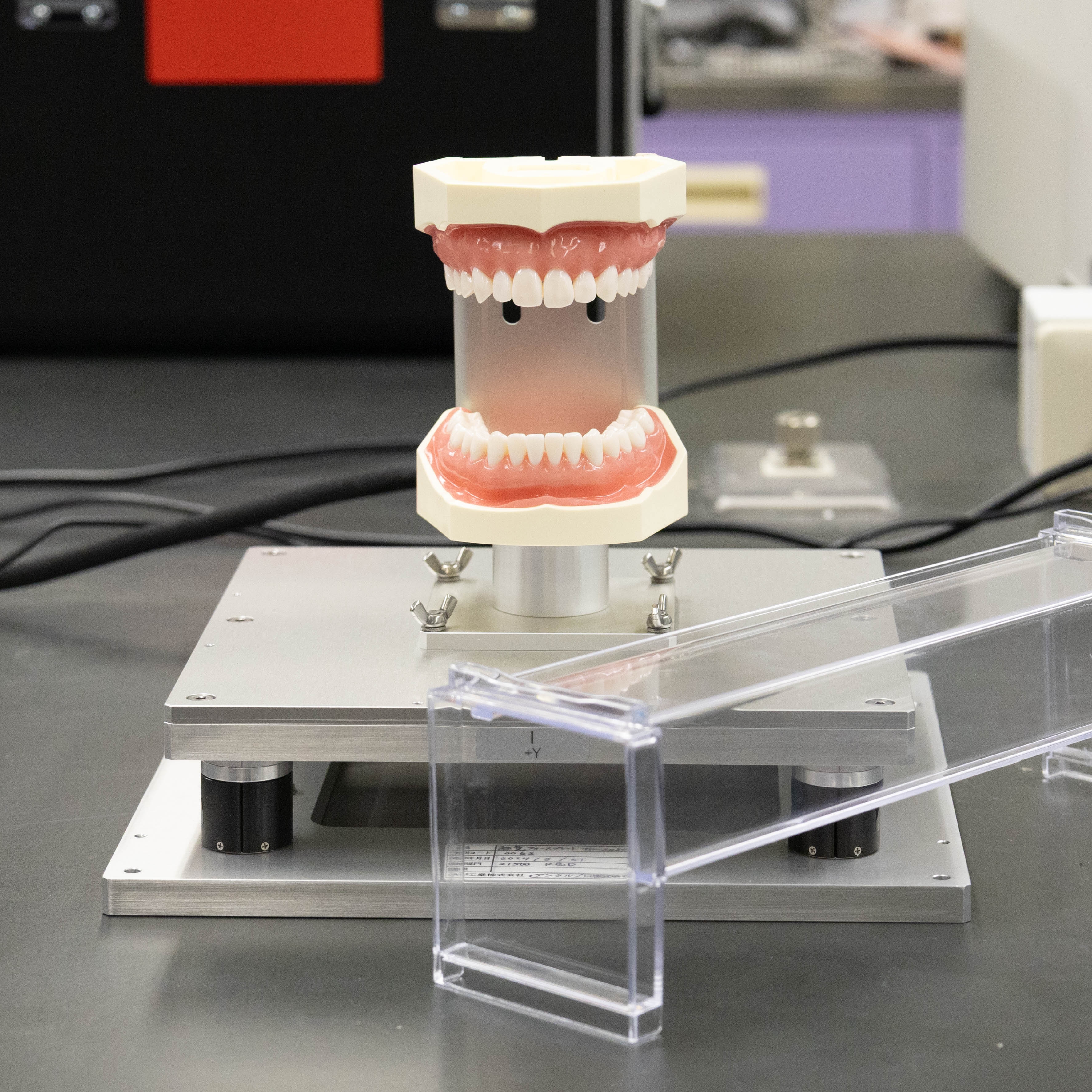 A hand support is prepared to prevent anything other than the interdental brush from touching the force plate
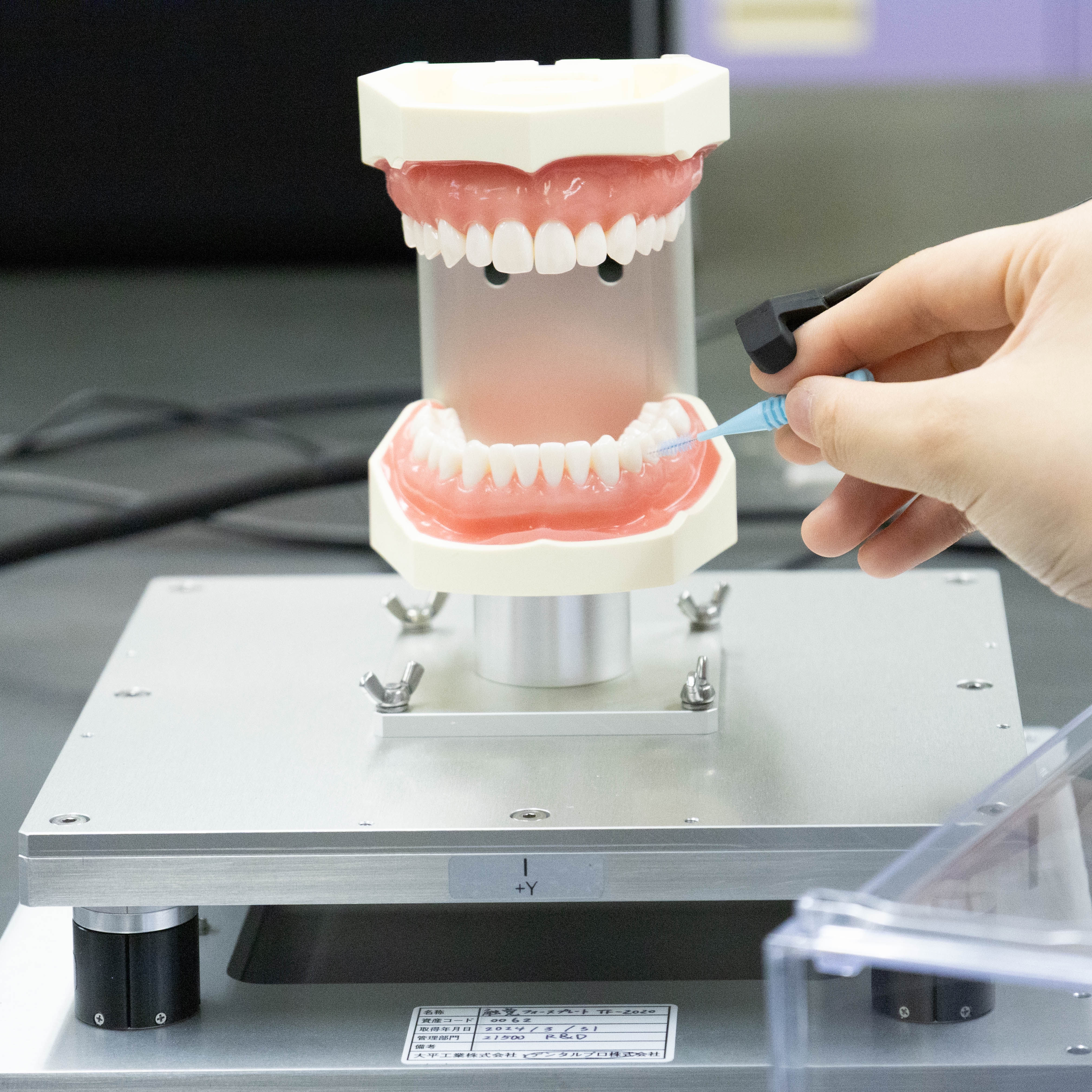 Inserting the interdental brush
- Experimental flow ① The interdental space between the lower right first and second premolars of a jaw model was selected.
② The subject selected an interdental brush size considered appropriate for the target.
③ No instructions were given regarding stroke width or insertion angle, and the subject performed five back-and-forth cleaning strokes freely.
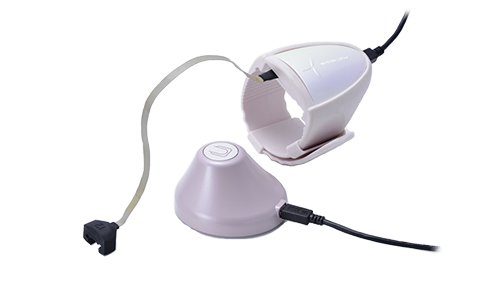
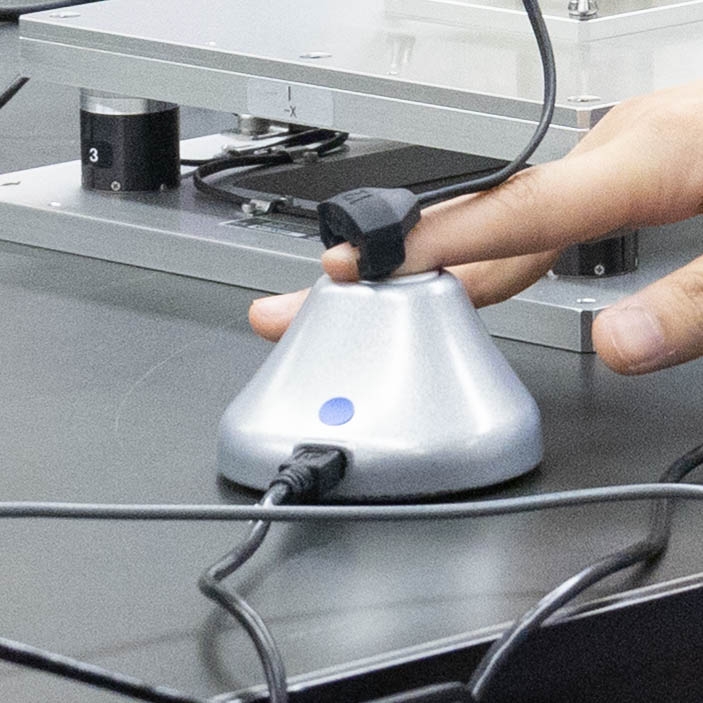
Although this experiment used a jaw model, it is ultimately desirable to measure in real human subjects. Therefore, attention was also given to the gripping force of holding the brush. If a correlation exists between brush insertion force and gripping force, it may be possible to estimate insertion force using gripping force alone. Gripping force was measured using HapLog.
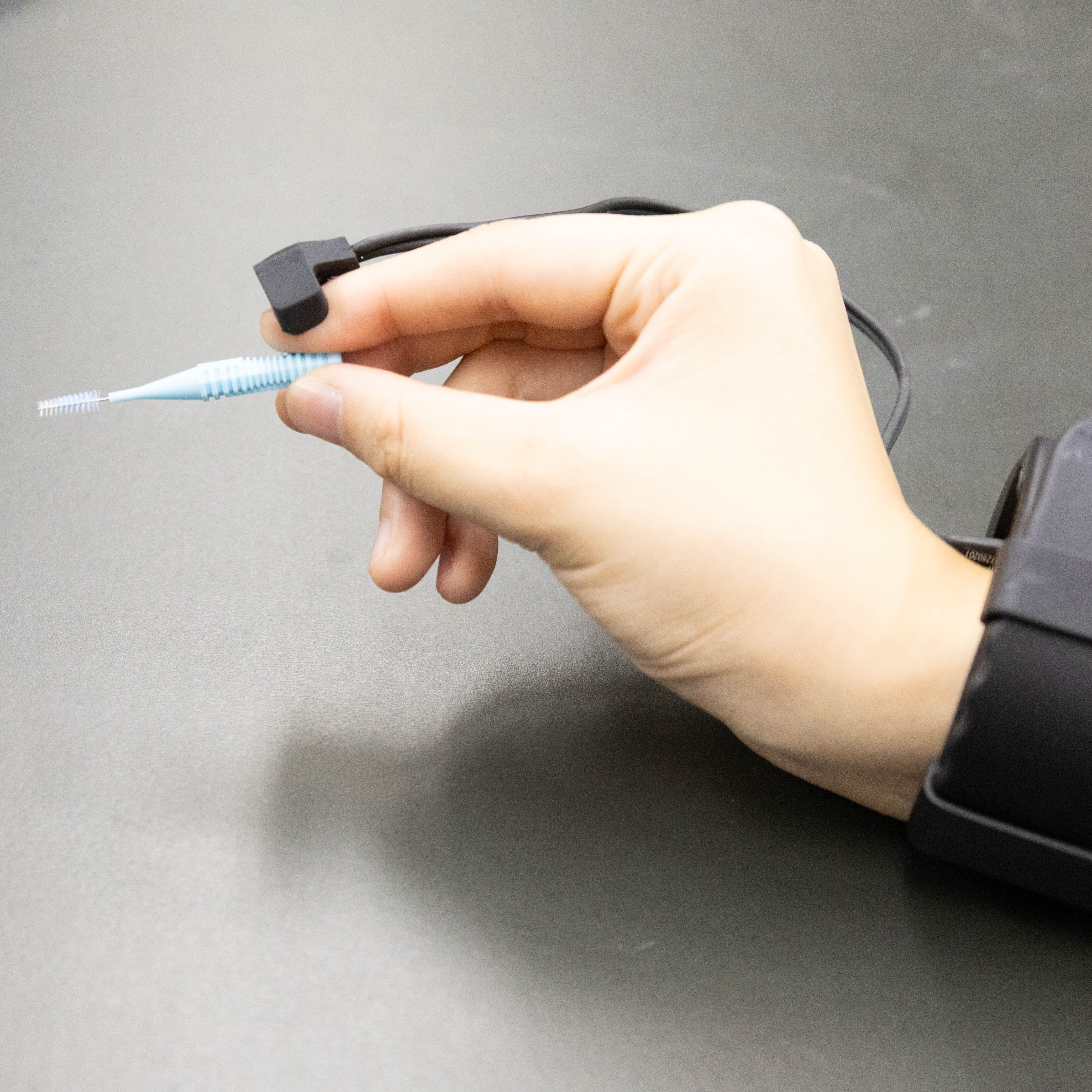 HapLog sensor attached to the index finger
 HapLog calibration
Results
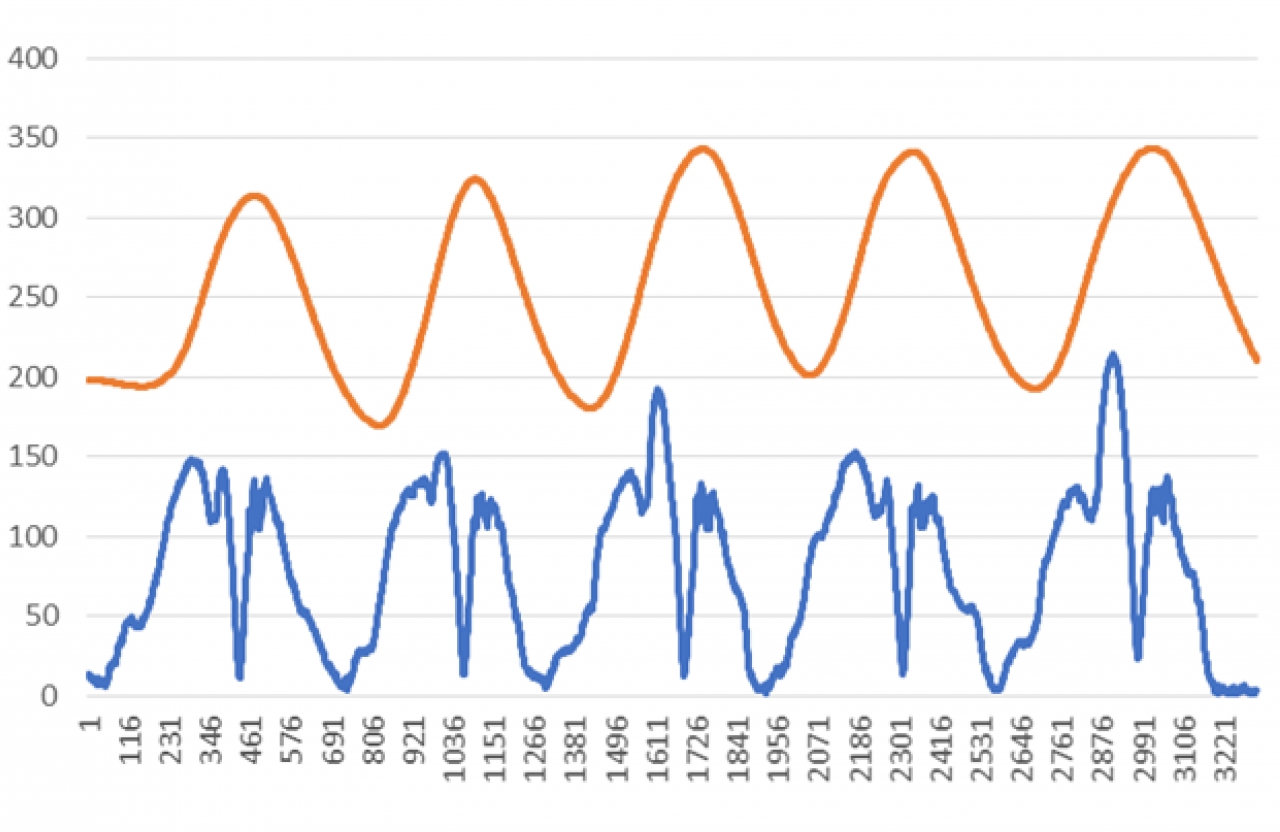
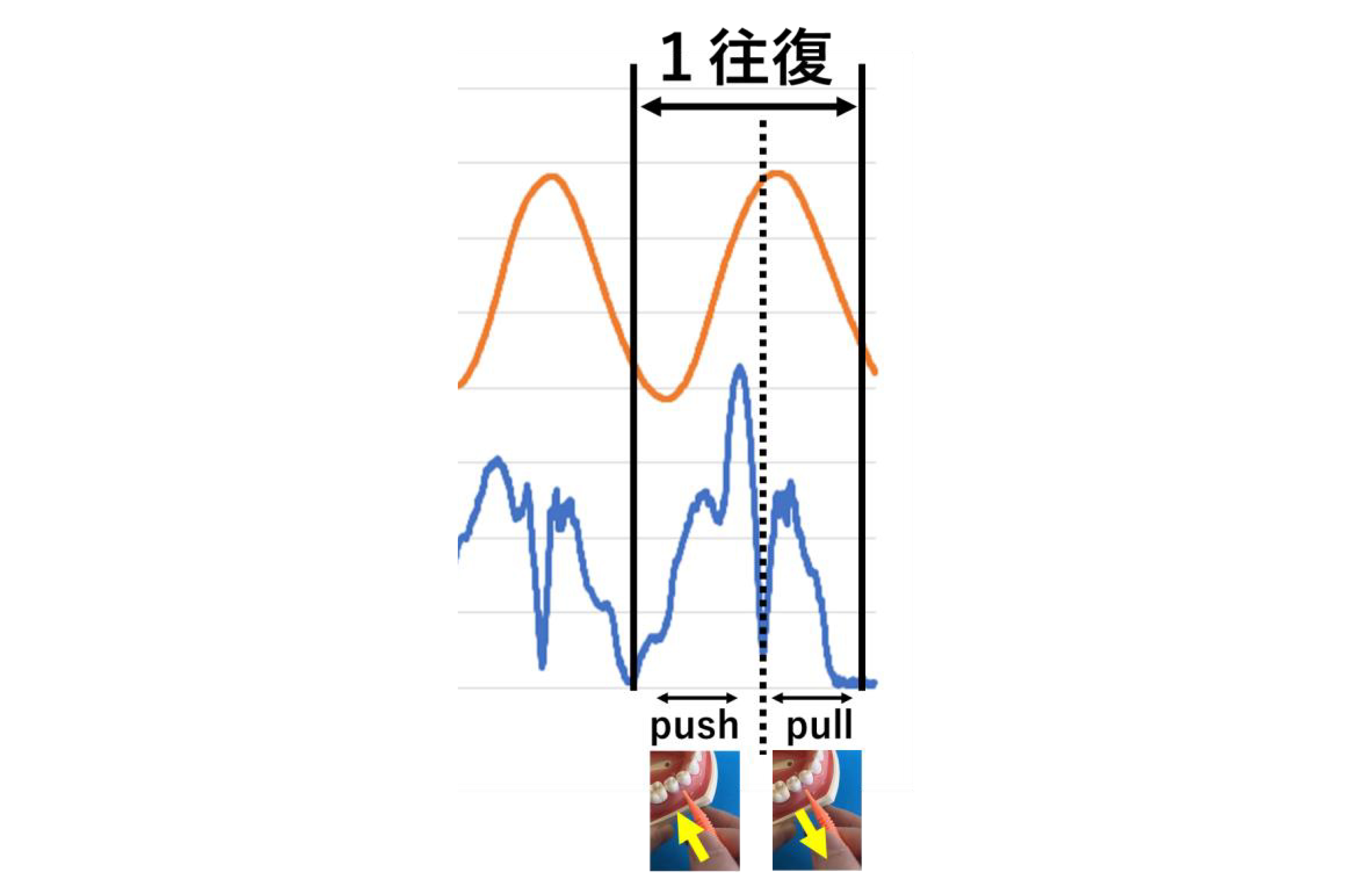
The force plate waveform (brush insertion force) shows two peaks (during insertion and withdrawal).
The HapLog (gripping force) waveform shows a single peak, with a phase shift relative to the force plate waveform. This is because one cycle of back-and-forth motion forms a single peak, and the maximum value often occurs when starting to pull the brush out after insertion. This is thought to be due to the bristles bending in the opposite direction during the pulling motion, creating resistance and increasing the pressing force. Overall, a correlation was observed between the force plate data (insertion force) and the gripping force.
 Example waveform
 Insertion and withdrawal waveform
When comparing different interdental brush sizes, an improper (too large) size tends to result in excessive insertion force, while an appropriate size leads to more stable and consistent force.
Future prospects
Although a standard jaw model was used in this study, it cannot perfectly represent all individuals. In particular, reproducing the contact surfaces between teeth remains a challenge. By combining intraoral scanning with 3D printing to reproduce interdental shapes and gradually introducing more realistic compliance (softness), it will be possible to improve model accuracy and conduct measurements closer to real conditions.
As research progresses and data accumulates, it will become possible to translate education into clear numerical and waveform-based guidance, such as “this level of waveform/value is appropriate.” Additionally, explaining with data can improve patient understanding (e.g., excessive force → bleeding/pain, insufficient force → remaining plaque) and encourage self-adjustment in daily care. This is expected to contribute to achieving higher-quality oral care.
Related Products